
Start with the potluck problem nobody wants to admit
Most potlucks are too polite. Everyone says, “bring whatever,” then you get three pasta salads, one heroic tray of biryani, and a dessert table that looks like the Checkers cake counter was raided at 4 PM. I love a generous table, but randomness is not charm after the first 20 minutes.
A better potluck needs one point of view. Not a theme with matching napkins and a 19 page WhatsApp brief. Just a food angle strong enough that people know what to bring, and you know what to book, borrow, chill, heat, and place.
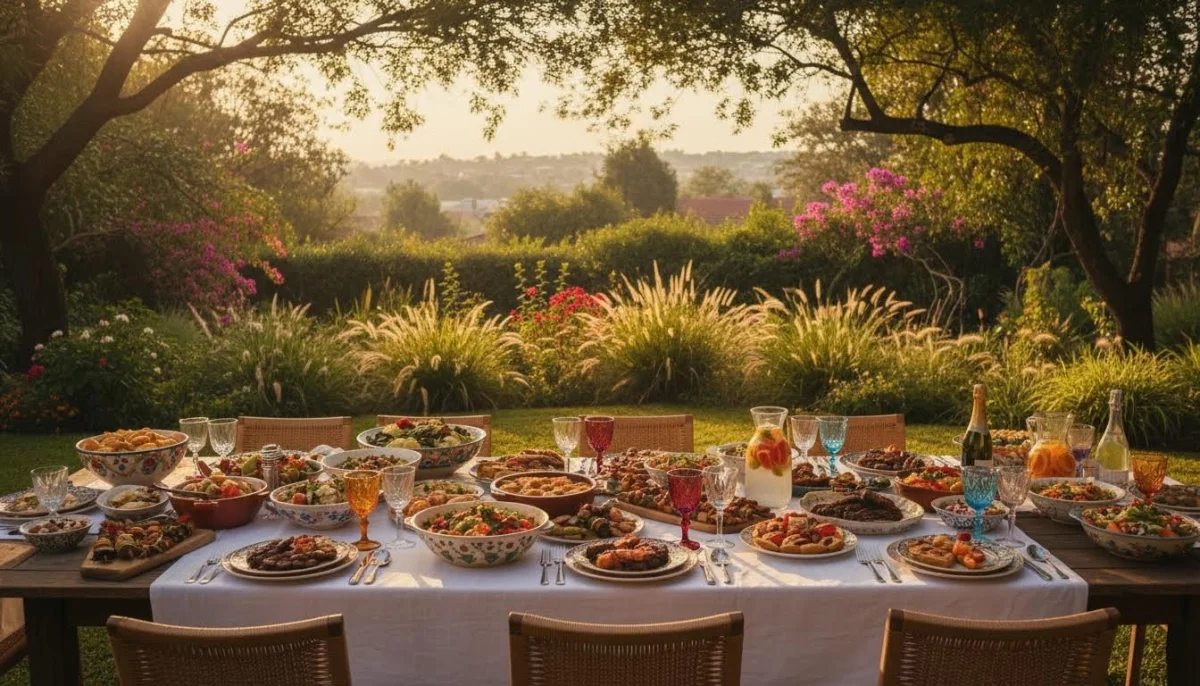
My favourite version is a “small bowls and big flavours” potluck. It works for birthdays, housewarmings, church group lunches, estate clubhouse dinners, and those friend gatherings where one person insists they are “not hungry” then demolishes the chilli bites. Instead of everyone arriving with giant trays that fight for space, each guest brings one compact dish with a proper flavour hit.
This is also where hired help should be quiet and useful, not flashy for the sake of it. Hires to book: Catering & Drinks, Fun Food Machine Hire, Table Florals, Sound Hire. That is enough. You are building a food night, not opening a mini expo.
Build the food around temperature, not around Pinterest

The fastest way to make a potluck feel better is to divide dishes into hot, room temperature, cold, and sweet before anyone cooks. It sounds boring because it is. It also saves the table.
For a 20 to 30 guest celebration, I would aim for 4 hot dishes, 4 room temperature dishes, 3 cold dishes, 2 crunchy snack options, and 2 desserts. That gives variety without every guest needing to bring a full meal. For 40 guests, double the snack layer before you double the mains.
Hot food should be the shortest list because heat management is the hidden admin. Bunny chow cups from a Durban curry shop are brilliant because they feel generous without needing big plates. Mini curry bowls from an Indian restaurant also work, especially if you keep rice separate in a warmer or covered pot.
| Dish type | Good examples | Why it helps |
|---|---|---|
| Hot | Mini curry bowls, boerie bites, peri-peri chicken strips | Feels like real food, but needs firm timing |
| Room temperature | Olive platters, falafel, spinach puffs | Buys you breathing room because it does not collapse fast |
| Cold | Smoked salmon bagels, chopped salads, dips | Good for early arrivals and summer events |
| Sweet | Peppermint crisp tart cups, mini milk tarts, macarons | Stops dessert from becoming one giant cake queue |
There is one detail that decides whether guests leave early: whether they can eat without fighting the table. Pay it off with small plates, wide serving spoons, and one obvious bin station. Not cute. Necessary.
The unique dish brief: bold, portable, and not precious
If you tell people “bring something unique,” half will panic and the other half will arrive with something that needs a blowtorch. Give a better brief: bring a dish that tastes like somewhere. A street corner in Durban. A braai stand outside a rugby club. A wine farm deli in Paarl. A mosque café after Friday prayers. Real places make better food decisions than mood boards.
Most People Forget
Guests care more about
- Food they can recognise after one look
- Easy scooping and no sauce leaks
- Something salty before the first drink hits
- A dessert portion they can take while standing
Than
- Tiny garnish nobody can identify
- Overcomplicated plating
- Five versions of the same starch
- A cake that needs a committee to cut
Blunt opinion: potluck sushi is overrated unless it comes from a proper sushi bar and stays cold. Warm salmon roses on a Pretoria patio are not impressive. They are a negotiation with fate.

Better choices move well. Mini samoosas from an Indian deli, koeksisters from a padstal on the N4, boerie bites from a neighbourhood butchery, dumpling platters from an Asian market, and peppermint crisp tart cups from a home baker. That is already a stronger table than six people trying to out-lasagne each other.
- Ask one guest to bring something spicy, but not five guests. SA friends pretend they can handle heat until someone starts coughing near the salads.
- Ask one guest to bring a sour or pickled thing. Atchaar, olives, pickled onions, lemony slaw. It cuts through rich food.
- Ask one guest to bring bread or scooping carbs. Roti, mini vetkoek, pita, garlic rolls. This is dull admin and guests will thank you silently.
- Ask one guest to bring a no-cut dessert. Tart cups, mini milk tarts, brownie squares, macarons. Knives disappear at parties.
Oddly specific thing I have noticed: dads at potlucks hover near the meat dish with one hand in a pocket, pretending they are “just checking what’s there.” They are not checking. They are guarding the boerie bites.
Where hiring makes sense, and where it is just theatre
A potluck does not need a full catering team unless your guest count is high, your kitchen is small, or the celebration has a proper programme. But one hired food anchor can make everyone else’s dishes feel better. I like booking one reliable main, then letting friends build around it.
For a decent catered potluck anchor in Joburg, Cape Town, Durban, or Pretoria, expect real money. A chef-prepped curry station, braai meat spread, harvest table, or grazing setup can land from around R180 to R450 per head, and premium menus climb higher. If the supplier includes staff, equipment, setup, and cleanup, that number starts making sense.

A truck or staffed food station works best when the potluck is more like a birthday or engagement lunch than a tiny dinner. It gives the meal a centre of gravity, while guests still bring their signature dishes.
A small food truck or staffed station can cost anywhere from R12,000 to R35,000 for a private event depending on menu, staff hours, travel, and minimum spend. That is not pocket change, so it should replace a lot of host effort, not just look nice in the driveway.
For fun machines, be selective. A slush station, popcorn machine, soft serve setup, or candy floss machine can be brilliant if there are kids, teenagers, or a long afternoon gap. Packages often land around R3,500 to R9,000, more if staffed or delivered far out. The machine must solve a party problem: heat, waiting time, dessert boredom, or kids orbiting the kitchen.
The table should look intentional, but not like a wedding
Potluck styling has a narrow lane. Too little and the table looks like a school hall fundraiser. Too much and everyone becomes scared to put down a Tupperware lid. You want structure, height, and a bit of colour, with enough messy tolerance for real food.


This is where a small stylist or florist can help, especially if the potluck is attached to a milestone birthday, kitchen tea, farewell, or family reunion. You do not need giant arrangements. Low florals, rented boards, linen runners, cake stands, and proper serving height do more than a balloon wall here.
A compact table styling package can sit around R6,000 to R18,000 depending on flowers, rentals, delivery, labour, and whether they stay to reset the table. For a bigger home event or clubhouse setup, it can go past that quickly. Ask what is included before you fall in love with the Instagram photo.
If your auntie brings food in a margarine tub, the table must still accept it. Otherwise you have designed a photoshoot, not a potluck.
Riley Adams
- Use one main table for savoury food and a separate sweet table if you have space.
- Keep flowers low enough that people can reach across without doing a rugby sidestep.
- Put sauces on trays. Sauce rings on linen look tragic by 7 PM.
- Have extra spoons, tongs, napkins, and small plates in a visible basket.
- Leave one empty landing zone for late dishes. Someone will arrive with a warm pot and no plan.
I had a sudden memory while typing this, the smell of waxy birthday candles mixing with coriander chutney in a Centurion family lounge. The food table was not perfect. It was alive, with people moving around it in little loops, plate, sauce, spoon, back again.
Music matters, but not like a club night
A food-centred potluck does not need volume wars. It needs clear background sound during arrival, a little lift after people have eaten, and maybe one mic moment if speeches or toasts are happening. If guests must shout over amapiano while trying to ask what is in the lentil salad, you have failed the food.

Sound is less glamorous than food, but it changes how people move through a room. A clean speaker setup keeps the room from feeling flat, especially in a clubhouse or large open-plan home.
For 30 to 60 guests, a professional sound setup with delivery, stands, cables, and a simple mixer can sit around R4,500 to R12,000. Add a technician, larger speakers, or a wireless mic and it climbs. This is where paying properly beats asking a cousin to bring a Bluetooth speaker that dies during dessert.
If you book a small jazz trio or acoustic act for the first 90 minutes, expect a proper fee, often R8,000 to R25,000 depending on players, travel, and time. I would only do this for milestone events or a crowd that will actually listen. Some crowds treat live music like fancy wallpaper, which is rude and expensive.
The under-explained thing: music tempo should follow chewing speed. Slow-ish while plates are full, warmer after seconds, then more playful when dessert starts. You will feel it if you are paying attention.

A potluck timeline that keeps food moving
Timing is where potlucks either feel generous or become a slow queue of people reheating things. You need a soft arrival window, a first bite within 30 minutes, and one reset before dessert. This is not military. It is traffic control.
| 2:30 PM | Host sets labels, spoons, plates, bins, drinks, and a landing zone for late dishes. |
|---|---|
| 3:00 PM | Guests arrive with cold and room temperature dishes. Put snacks out immediately. |
| 3:30 PM | Hot dishes land. Main food service or the anchor dish starts. |
| 4:15 PM | Table reset. Remove empty trays, wipe sauce spills, bring out extra breads and salads. |
| 5:00 PM | Dessert cups, coffee, slushies, or soft serve appear. Keep it easy to grab. |
| 6:00 PM | Leftovers are packed before everyone forgets which dish belongs to whom. |
For an evening version, shift everything later but keep the same logic. Arrival snack, main food, reset, sweet ending. I would still put something salty out within 20 minutes, even if the main food is planned for later.

If you are using a hired snack machine, schedule it as a chapter, not background noise. Slushies on a hot Gauteng afternoon work from arrival. Soft serve is better after savoury food. Popcorn can run early for kids, but if you put it beside the main table, you will find kernels in the salad serving spoon. I have seen it.
South African food picks that make the table less boring
You do not need rare ingredients. You need familiar food with a slight left turn. The strongest potluck dishes often come from places people already know, just chosen with more intent than a last-minute packet of chips.


| Instead of | Bring this | Source |
|---|---|---|
| A giant pasta salad | Chilli bites with green chutney | A rugby club snack bar or local butchery |
| One large cake | Mini milk tarts | A church bake sale or neighbourhood bakery |
| Plain chips | Olive and antipasto platters | A Mediterranean deli |
| Dry chicken pieces | Peri-peri chicken strips | A flame grill restaurant |
| Mystery dessert trifle | Peppermint crisp tart cups | A reliable home baker |
For supermarket gap-filling, keep it moderate and specific. A tray of child-friendly snacks or dessert squares can sit around R600 to R1,200 depending on size and shop. Use that to support the table, not to fake an entire catered spread.
If you are near a padstal on the way in, koeksisters are worth the stop. They bring that sticky, cold, syrupy seriousness people pretend not to want. Place them away from the savoury food, unless you enjoy chutney fingerprints on dessert.
Set the room so people move, not queue
Movement matters. A potluck table should create loops, not blockages. People need to arrive, drop food, greet, drink, serve, sit, stand up again, and drift back without crossing one narrow doorway 37 times.
The Potluck Should Move Like This
- Guests arrive and see where dishes go
- Early snacks are visible before the main table opens
- People collect plates from the start of the flow
- Hot food sits near the anchor dish or hired station
- Sauces and breads come after mains
- Desserts appear later on a different surface
- Leftovers get packed before the last good container vanishes
Put drinks away from the food table. This single decision fixes more crowding than any decor plan. If drinks sit at the end of the buffet, one person choosing between tonic and lemonade can freeze the entire meal line.

A clubhouse gives you more room, but it also exposes bad layout. Empty space does not automatically solve flow. You still need zones.
In a home, use the kitchen counter for landing and reheating only. Serve elsewhere if you can. The kitchen becomes a magnet for bags, jackets, foil, cousins, children asking for juice, and one uncle opening the wrong cupboard.
Should guests label dishes?
Yes, especially for nuts, pork, seafood, and heat level. A folded card is enough.
How many serving spoons do I need?
More than you think. Plan one per dish plus five spare spoons or tongs.
Can I ask people not to bring dessert?
Yes. Say dessert is covered and ask for breads, salads, or drinks instead.
Final decision framework: what to cook, assign, buy, and book
If your priority is low stress, book the main food and assign guests snacks, breads, salads, and desserts. If your priority is budget control, skip the hired food station and spend on serving gear, ice, drinks, and one strong dessert run. If your priority is making the event feel polished, spend on the table setup and keep the food brief tight.

For 15 to 20 guests, you can manage most of it yourself with assigned dishes and a few bought extras. For 25 to 45 guests, one hired anchor starts to make sense. Above 50 guests, you need clearer staffing, rentals, or a venue with proper prep space, otherwise the host becomes a tired traffic officer with a dishcloth.
| Your main worry | Best move | Spend where it counts |
|---|---|---|
| Too much random food | Give guests categories, not freedom | Labels, serving pieces, and one anchor dish |
| Nobody brings enough filling food | Book a main station or caterer | Protein, starch, staff, cleanup |
| The table looks messy | Use low styling and proper boards | Linen, florals, height, trays |
| People leave early | Feed them within 30 minutes | Arrival snacks, drinks zone, sound |
I am saying this while a neighbour’s leaf blower has started outside, which feels personally targeted. Still, the point stands: the best potluck is not the fanciest one. It is the one where the food has rhythm, the hired bits carry real weight, and guests can keep moving with a plate in one hand and a cold drink in the other.
Use TimeToParty to compare South African food, styling, sound, and fun snack suppliers for your guest count and venue type. Book the pieces that remove pressure, then let your friends bring the flavour.
Comments
Join the conversation — no account needed. Comments are moderated before they appear.
Be the first to leave a comment.
Leave a comment