
Start with the wine person, not twelve bottles from Checkers
For a small dinner, the main hires I would actually spend money on are Wine Tasting, Caterers, Centerpieces, Outdoor Heaters, and Wine Estate Venues. That’s the whole spine. Not a DJ in the corner looking abandoned, not a balloon arch beside the Pinotage, not a fog machine creeping under the dining chairs like a school hall matric dance.
The wine guide matters because six people will notice everything. The wrong pour. The glass with the dishwasher smell. The uncle who says he only drinks red and then finishes the Chenin. A proper tasting host keeps the room moving gently, explains without lecturing, and stops your table turning into a guessing game where everyone says “berries” until someone brave mentions tobacco.
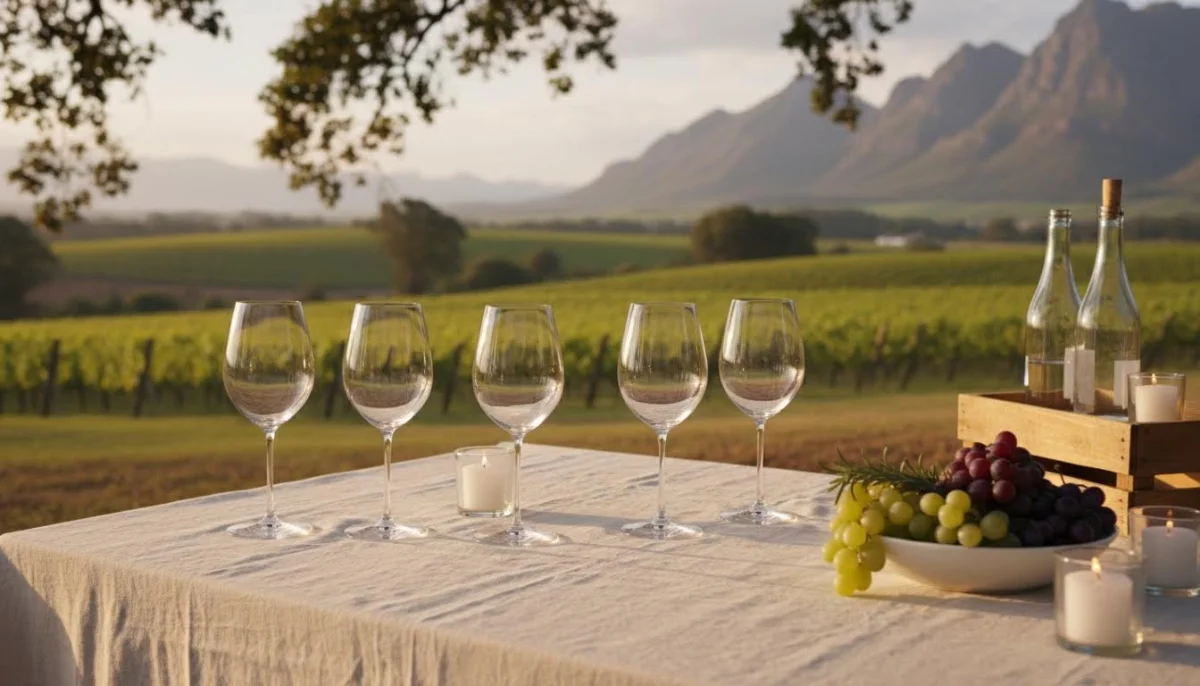


What people expect
- Guests will carefully compare every pairing.
- Everyone wants rare imported bottles.
- A tasting is too formal for dinner at home.
What actually happens
- They remember the one wine that made the food taste better.
- People enjoy one confident local choice more than five confusing ones.
- A relaxed wine host can save the host from doing all the talking.
Your menu must behave itself
Blunt opinion: a rich chocolate dessert with a dry red is punishment wearing nice shoes. I know people love sounding generous with “we’ll just open another bottle”, but that is not a pairing strategy. It’s a fridge clean-out with confidence.
For 2 to 6 guests, a caterer is not about feeding a crowd. It’s about control. Portion size, timing, sauces that don’t split, and not having your kitchen smell like fried onions while someone is trying to notice the citrus in a Sauvignon Blanc. Expect anything from around R450 to R1,200 per person depending on courses, ingredients, chef presence, and how precious the plating gets.
| Course | Food direction | Wine direction | Tiny warning |
|---|---|---|---|
| Starter | Goat cheese, oysters, citrus salad, light seafood | Crisp white, Cap Classique, dry rosé | Avoid heavy garlic if you want the first glass to taste clean |
| Main | Lamb, mushroom risotto, duck, beef fillet | Pinot Noir, Cabernet blend, Syrah | One over-salted sauce will bully the wine |
| Dessert | Stone fruit, crème brûlée, dark chocolate tart | Late harvest, MCC, port style wine | Match sweetness properly or the wine tastes thin |
One detail decides whether guests leave early: the pacing between the main and dessert. Too long and everyone drifts to the kitchen, too short and the table starts sighing softly because nobody has finished their red. A hired chef or small catering team usually handles this better than a host who is also trying to remember whose glass belongs to whom.
Serve the wine slightly cooler than you think, especially in Gauteng. Your dining room is not a cellar, it’s a room with people breathing in it.
A wine rep I once met at an estate clubhouse tasting
The table should not look like a wedding sample board
This is where I overthink, happily. Small dinners make table decor very visible. Guests stare at the arrangement between sips, especially during that strange ten minutes when the first course is finished and nobody knows if it is rude to ask for more bread.
Hire the low arrangement. Not the tall arrangement. Tall flowers at a dinner for six are a social tax. You will spend half the night leaning around lilies to hear someone from Bryanston explain their new air fryer. And lilies smell bossy, which is not a wine note anyone asked for.
- Choose low bowls, bud vases, fruit, taper candles, or sculptural greenery that sits below eye level.
- Keep strong scents away from the glass. Eucalyptus can be lovely, but too much of it makes everything taste like a spa towel.
- Ask for linen napkins if your supplier offers them. Paper napkins beside proper stemware always look slightly apologetic.
- Leave space for water, wine, side plates, and the inevitable phone someone places face-down as if that makes it less present.
- Use candlelight, but not so much wax that the tablecloth looks like it survived a church bazaar.
A good stylist will also calm the rented tableware situation. Matching glasses are nice, but not always necessary. Clean, thin-rimmed wine glasses matter more. I once saw a host in Pretoria polish six glasses with a clean baby muslin because the venue cloth left tiny fibres on everything. Slightly unhinged, yes. Also correct.
If you sit outside, hire heat before you hire drama
Cape Town people will say the evening is mild while wrapping both hands around their glass like it owes them money. Joburg people will pretend not to be cold until someone’s shoulders reach their ears. Durban is kinder, but even there a terrace dinner after rain can feel damp around the ankles.
Outdoor warmth is boring to book and very glamorous to have. It lets people linger over the last pour instead of rushing inside to stand near the scullery. For a small dinner, one or two elegant standing heaters may be enough, depending on the patio size. Check the gas situation with the supplier. That sentence is dull because the task is dull.
| 5:30 PM | Table dressed, wine chilled, heaters placed but not yet roaring. |
|---|---|
| 6:15 PM | First pour, small snack, guests stop hovering near the kitchen. |
| 7:00 PM | Starter served before the room becomes too talkative. |
| 8:10 PM | Main course, red wine, the table gets louder in a pleasant way. |
| 9:00 PM | Dessert wine or MCC, heater turned slightly down because one guest is now too warm. |
The tiny disaster I still think about
A few winters ago, I went to a small birthday dinner at a lovely estate clubhouse near Midrand. It was one of those rooms with beige tiles, thick curtains, and a rule about no red wine near the lounge rugs [fair enough, but still stressful]. The host had chosen beautiful wines, genuinely good ones. The starter was late because the oven had been set to grill by mistake, which nobody admitted until the tomatoes came out with black shoulders and cold centres. Then one guest, trying to help, opened the red too early and placed it next to a sunny window. By the main course it was warm enough to taste like fruit soup. The wine host stayed kind, which saved the table. She asked for an ice bucket, cooled it gently, and moved everyone back to the white for a few minutes while the caterer rebuilt the plate. Nobody died. Nobody even complained properly. But I remember the smell of scorched tomato skin, the little stack of used tasting cards under a bread plate, and the host’s husband standing in the passage pretending to check emails because he couldn’t watch. This is why I like hiring calm people. Not fancy people. Calm people.
Home dining room or wine estate table
A home dinner is softer. Shoes come off, someone knows where the bathroom is, and you can use your own music at a gentle level. A wine estate table feels more polished from the start, especially in Stellenbosch, Franschhoek, Constantia, or the better known Pretoria and Magaliesberg spots with private tasting rooms. The tradeoff is control. At a venue, you live inside their timing, their chairs, their lighting, and sometimes their very specific rule about confetti even though nobody mentioned confetti.
Is a wine estate worth it for only four people?
Yes, if the venue has a private or semi-private tasting option. If you are sitting beside a tour group, no. That will not feel intimate.
Can I ask the caterer to match an existing wine collection?
Usually, yes. Send bottle photos and labels early. A serious caterer or wine host will want the varietal, vintage, and style.
Should every course have a different wine?
Not always. Two wines and one dessert pour can feel generous without making the table sleepy.
There is one under-discussed thing about venues: the smell of the room. A private cellar smells romantic for ten minutes, then some guests notice the damp wood and start whispering about sinuses. A patio near a kitchen can smell like chips. A dining room beside a fireplace can make delicate whites taste smoky before they touch your mouth. I’m not sure everyone cares, but I do.
What I would actually book for six people
- A tasting host for three pours, with one local bottle that feels special but not theatrical.
- A small caterer or private chef who can plate quietly and clear without making the table feel watched.
- Low table styling with proper candles, linen, and unscented arrangements.
- One or two heaters if the meal is outside, even if the forecast looks friendly.
- A private table at an estate only if the room is truly calm and not squeezed beside a tasting counter.
Pricing varies badly by province, season, chef, wine choice, and travel. A neat small dinner can sit around R4,000 to R12,000 before premium bottles, venue fees, or private room minimum spend. That is a wide range, but small dinners are like that. The table might be tiny and still expensive because every object is close enough to be judged.
Use TimeToParty to find a wine tasting host, a small dinner caterer, table styling, outdoor warmth, or a private wine estate setting in South Africa. Book the calm ones.
Comments
Join the conversation — no account needed. Comments are moderated before they appear.
Be the first to leave a comment.
Leave a comment