
Start with the case, not the ghosts
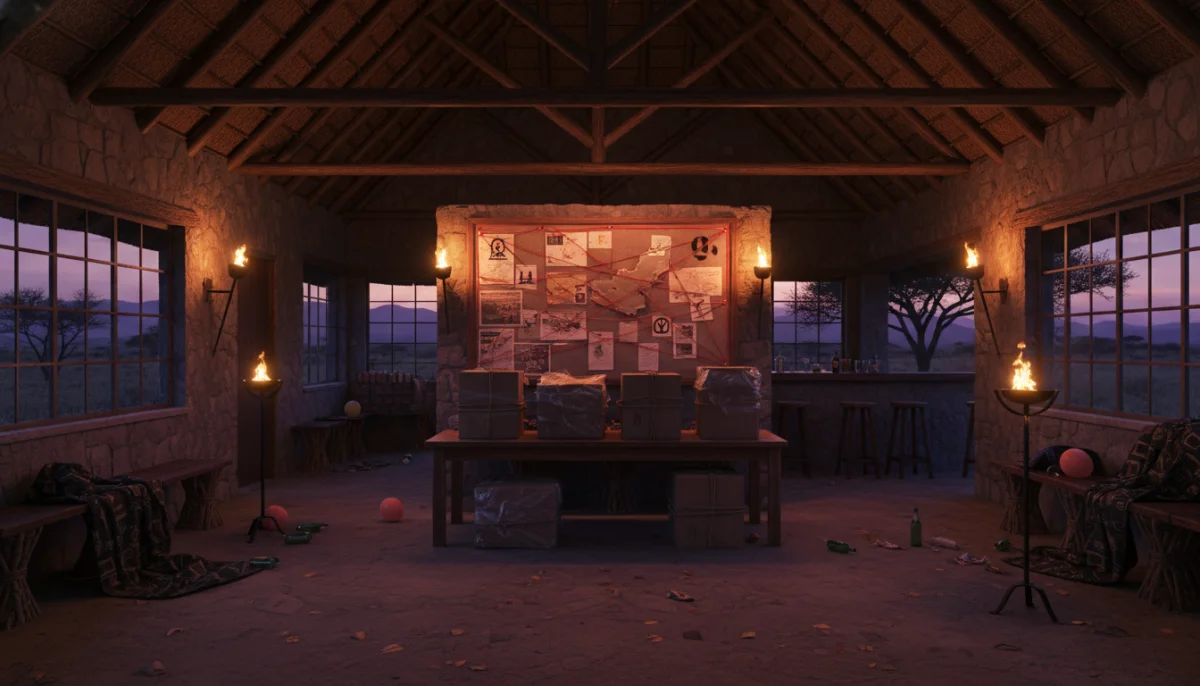
A Paranormal Evidence Hunt works best when it feels like a case has been dumped in front of your guests, not like someone bought skull serviettes and called it a theme. The point is investigation. Missing caretaker. Cold room. Audio recording with a cough where no person should be. One locked tin. A map with tea stains. It should feel slightly official, slightly ridiculous, and playable.
This sits nicely inside the escape room party world because the guests are not just watching a spooky thing happen. They are building a theory, testing it, arguing over what counts as evidence, and shouting at the one cousin who keeps pocketing clues. You know the one. Every family has a clue hoarder.
Do not start with a ghost story. Start with a file that looks like somebody had a bad week at a municipal office.
Clive Bennett
I would set it in a familiar South African place type. A school hall after a rainy Saturday netball fixture. An estate clubhouse in Centurion with those brown stacking chairs and a rule about no confetti. A church side room in Durban North. A community centre in Bellville where the kitchen smells faintly of dishcloth and Ricoffy. Familiar spaces make the uncanny stuff work harder because nobody expects a paranormal case next to a trestle table.
The narrow version that actually works

Keep the story tight. One location, one missing person, one suspected haunting, one final answer. That is plenty. A case with five ghosts and a family curse starts sounding like a Grade 10 drama practical.
The version I like is called the midnight maintenance log. The venue caretaker, security guard, or house supervisor has reported strange activity over three nights. Guests receive the file. They must prove whether it is a haunting, a hoax, or a cover-up. That gives you a clean structure and a useful excuse for boring evidence: access logs, receipts, photographs, scratchy audio, broken inventory sheets. Boring evidence is excellent. It makes the later spooky clue feel earned.
Blunt opinion: most fake séance party ideas are embarrassing. People sit around a table whispering at a candle and nobody knows what they are allowed to do. Give them locks, codes, suspects, and a reason to move around.
- Write a one-page incident report before buying decor.
- Choose three suspects only: caretaker, cleaner, committee member.
- Prepare six evidence drops, not twenty.
- Use one final locked box for the reveal.
- Let teams disagree before you confirm the answer.
There is one detail that decides whether guests leave early: the first ten minutes must make them feel competent. If the opening clue is too hard, the room goes quiet in the wrong way. Not mysterious quiet. Spreadsheet quiet.
What to hire, lightly, so it still feels like your party


Hires to book: Escape Rooms, Event Apps, Backdrops & Props, Smoke Machines, Security Guards. That is the whole list I would seriously consider for this theme. Not all at once, not for every budget, and not because a party needs to resemble a mall activation.
The strongest booking is a mobile escape room team or facilitator who can run the case, reset clues, and stop confident guests from breaking the puzzle by brute force. A proper Saturday booking for a custom home or venue setup can sit around R9,000 - R22,000 depending on group size, travel, puzzle complexity, and whether they build props for your story. It is not a cheap add-on. It is the engine.
A simple app layer can help if you have teenagers or office adults who want scoring, timed hints, QR evidence, or suspect voting. Budget closer to R4,500 - R12,000 for a polished event version with setup support, not some free quiz link your nephew made while waiting outside Nu Metro. The app should support the hunt, not replace the room.
Props are where people overspend badly. You do not need a full haunted mansion. You need three good surfaces: the evidence table, the suspect wall, and the final reveal corner. A prop and backdrop supplier might charge R6,500 - R18,000 for a compact set with aged documents, lockable boxes, police-style boards, lamps, signage, fabric, and weird little objects. If the supplier understands restraint, pay them. If they arrive with inflatable gravestones, have a conversation.
A haze unit can be brilliant if the room is large enough and the venue allows it. It makes torch beams visible and gives the reveal a more cinematic edge. It can also annoy alarms, asthmatic guests, and venue managers with laminated rules. A decent hire with fluid and operator support can run about R3,500 - R7,500 for the evening. Use less than you think.
For bigger venues, one discreet door person or roaming safety presence may be sensible. Not a bouncer vibe. Just someone who keeps guests out of the kitchen corridor, protects hired gear, and stops a group from wandering into the caretaker’s actual storeroom. Expect R1,500 - R3,500 per guard depending on hours, location, and agency. This is dull information. It is also the kind of dull information that saves your deposit.
Build the evidence like a person would find it

Evidence should have different textures. Paper, sound, objects, light, smell, and witness statements. Too much printed paper makes the party feel like homework with snacks.
Start with the dullest document first: a maintenance log. Put times, initials, and tiny inconsistencies in it. Then add a photo with a shadow in the wrong place. Then a receipt from a hardware shop. Then a voice note. Then the object that does not belong. The escalation should be gradual, because if you open with a screaming ghost recording, everything afterwards has to work too hard.
The oddly specific detail I always notice at these parties is the parent who stands with arms folded near the snacks, pretending not to help, then quietly solves half the cipher from three metres away. They do not want a team badge. They want to be right.
| Evidence | What guests do with it | Why it works |
|---|---|---|
| Maintenance log | Compare times and initials | It looks boring enough to be believable |
| Audio clip | Listen for a hidden word or background sound | Sound makes people huddle without being told |
| UV message | Reveal writing under black light | It gives a small theatrical payoff |
| Object clue | Match an item to a suspect | People like holding proof |
| Venue map | Trace movement across rooms | It makes the space part of the game |
If you are using sound, test it at the venue. A small Bluetooth speaker sounds fine in a lounge and pathetic in a school hall. You do not need nightclub volume. You need clarity. Guests must hear the second cough, the gate clang, the whispered number, or whatever little clue you have hidden in the recording.
The room should feel suspicious, not decorated to death


The best visual direction is municipal paranormal. Filing folders, cheap clipboards, taped-off cupboard doors, dust sheets, numbered evidence cards, and one good lamp. You want the room to say someone official has already failed here.
Warm light helps. A few desk lamps in corners do more than blue LEDs everywhere. Blue lighting makes people look ill and photographs badly unless handled properly. I know it is meant to read as ghostly. Mostly it reads as aquarium.
Most People Forget
Guests care more about
- Readable clues
- A clear place to start
- Props they can touch
- The moment the theory clicks
Than
- Fog in every corner
- Twelve kinds of fake blood
- Expensive themed napkins
- A complicated backstory nobody hears
If you are in a hired clubhouse, check wall rules early. Some estate venues allow Prestik but not tape. Some allow tape but not anything on glass. Some ban open flames, which is fair, because there is always one person who places a serviette too close to drama. Use battery candles if you must.
A proper party flow, because people cannot investigate forever

But will teenagers stay engaged past 30 minutes? Yes, if the pace changes. No, if you leave them in a room with envelopes and hope their natural curiosity pays the entertainment bill.
| 0:00 | Guests arrive, grab drinks, see the sealed evidence table but cannot touch yet |
|---|---|
| 0:15 | Briefing starts, the case file is opened, teams get their first envelope |
| 0:30 | First lock opens, confidence rises, snacks appear before anyone gets brittle |
| 0:55 | Audio clue and UV clue land close together, the room gets louder |
| 1:15 | Teams submit a theory, wrong assumptions are exposed kindly |
| 1:30 | Final reveal, photos, cake, normal party noise resumes |
Do not feed guests a heavy meal before the hunt if you want momentum. Give them something small on arrival, then proper food after the reveal. A room full of people digesting burgers is not investigative. It is a lounge.
The hunt should rise in volume
- Guests enter quietly and inspect the sealed table
- The briefing makes the case feel slightly official
- The first easy clue gets everyone talking
- A sound clue pulls people into a tight little listening circle
- The false theory collapses
- The final code opens and everyone claims they knew it
Food for detectives who forgot to eat lunch

Keep food handheld before the game and warmer after the reveal. Nobody wants chutney on the suspect statements. Actually, someone will do it anyway.
For a South African crowd, the snack table should not be too precious. Mini samoosas from an Indian deli are useful because people understand them immediately and they disappear without ceremony. Boerie bites from a proper butchery work after the game, especially if you have adults who pretend they are only having one. Brownie platters from a local coffee shop cover the sweet tooth without forcing a themed dessert shaped like a ghost.
If you are feeding a mixed crowd, label meat, vegetarian, and halaal items clearly. This is not a moral lecture. It just prevents people from interrogating every platter like it is part of the game.
A Checkers cake counter tray can fill the gap if your proper dessert is small, but do not let the cake become the event. This is a clue party. Cake is cake. Sometimes that is enough.
Writing clues for mixed ages without insulting everyone

Mixed ages are the real puzzle. Ten-year-olds want to find physical things. Teenagers want to be quicker than adults. Adults want to solve the thing and then claim they were not competitive. Design for all three.
Use layered clues. A younger guest can find the hidden key under a chair. A teenager can decode the UV writing. An adult can spot that the time stamp on the access log does not match the audio. Same case, different kinds of satisfaction.
Role cards sound fussy, but they help. Keep them simple. Do not create a whole personality system unless your guests enjoy admin. Most people just need permission to participate without having to elbow in.
How many guests is ideal?
Six to twelve is clean. More than that needs stations, a facilitator, or two parallel cases.
Can younger kids play?
Yes, if the scary part is atmosphere, not horror. Let them find objects and match symbols.
Should guests dress up?
Optional. Investigator coats and torch props are fine. Full ghost costumes get hot and then sit in a pile.
Sound is the cheapest way to make the room feel alive


Sound does not need to be loud. It needs to be placed. A low hum from one corner, a gate sound that plays once, a voice note with a background radio jingle, footsteps in a corridor. The best audio clues make guests ask to hear them again.
A school hall is unforgiving. It eats dialogue and throws it back as soup. If that is your venue, use shorter clips and external speakers rather than relying on a phone. Put the sound source near the clue station, not across the room near the urn.
Music can sit underneath arrivals and food, but kill it during evidence listening. Nothing ruins a whispered number like amapiano from the next room bleeding through the wall. I like music. I do not like music arguing with a clue.
| Cue | Use | Keep it subtle by |
|---|---|---|
| Room tone | Makes the space feel occupied | Keeping it low and uneven |
| Gate clang | Marks a location clue | Playing it once, not on a loop |
| Radio fragment | Hides a date or code | Using a real-sounding station bed |
| Footsteps | Suggests movement | Placing the speaker off-centre |
The clue route inside a normal South African venue

A normal venue is fine. In fact, it is often better. A polished event space can fight the story because everything looks too clean. A slightly tired hall, clubhouse, or family lounge gives you corners, doors, cupboards, noticeboards, and that one framed certificate nobody has read since 2009.
Use zones. Arrival table near the door. Evidence board on one wall. Locked box station away from traffic. Audio station somewhere people can gather. Final reveal corner partly hidden until needed. If you make guests cross the same room with purpose, the event feels bigger than the floor plan.
Expect vs reality
What hosts imagine
- A haunted route through every room
- Lots of hidden clues in risky places
- A dramatic blackout every few minutes
What works better
- Four clear stations with good sightlines
- Clues placed where people are allowed to search
- One lighting change at the final reveal
If the venue has a kitchen, decide early whether it is in play. I would keep it out unless you enjoy strangers opening cupboards and discovering committee tea bags, spare serviettes, and a single lonely tin of cremora.
How scary should it be?

Aim for uneasy, not cruel. A party is not the place to discover which child hates jump scares. Adults also pretend bravery badly.
The sweet spot is PG creepy. Strange sounds, inconsistent witness statements, cold-looking lighting, and one reveal object under a cloth. Avoid gore unless the whole group asked for it. Even then, use less. Gore is usually a shortcut for weak writing.
For younger kids, make the haunting explainable. A hoax, a hidden tunnel, a neighbour, a jealous committee member. For older teens and adults, you can leave one tiny ambiguity at the end, but do not make the whole solution vague. People want to know if they solved it.
- Good scare: a voice note that changes meaning after a later clue.
- Lazy scare: someone jumping from behind a curtain.
- Good tension: a locked box that should not open yet.
- Lazy tension: making guests wait while you look for the key.
- Good ending: the evidence proves one suspect lied.
- Lazy ending: the ghost was real because you say so.
Cape Town wind can add its own sound design if the venue has loose windows. I once heard a roller blind knock for twenty minutes in a community room and everyone accepted it as part of the case. It was not. It was just a tired blind doing public service.
Budget, without pretending this is a R500 party

This party can be modest, but not if you want professional facilitation, proper props, audio, lighting, and someone to manage the room. The money goes into design time and people who know how groups behave under timed pressure. That is not glamorous, but it is real.
| Item | Likely range | Notes |
|---|---|---|
| Mobile escape room facilitation | R9,000 - R22,000 | Higher for custom story, travel, and multiple teams |
| App-based scoring or QR layer | R4,500 - R12,000 | Useful for teens, corporates, or larger birthdays |
| Props and backdrop package | R6,500 - R18,000 | Spend on evidence surfaces, not generic spooky clutter |
| Haze or smoke effect with support | R3,500 - R7,500 | Only if the venue permits it |
| Door or safety staff | R1,500 - R3,500 per person | Useful for bigger venues or open-plan routes |
If the budget is tight, cut the scenic extras before you cut the clue quality. A plain table with brilliant evidence beats a decorated room with broken logic. Guests will remember the solution more than the bunting. I am aware bunting has feelings in some households.
For a birthday at home in Randburg, you could do a lean version with one facilitator, printed evidence, simple locks, lamps, and supermarket snack fillers around proper hot food. For a 21st in a larger Pretoria venue, I would rather spend on a structured team format and better sound than on more decor.
What TikTok gets wrong about this theme


The online version often looks like black balloons, red lighting, fake blood, and a dramatic caption. Fine for a photo. Thin for a room full of people who need something to do. A Paranormal Evidence Hunt is closer to a social deduction puzzle than a Halloween table setting.
Do not hide all clues too well for the sake of content. A video of someone discovering a secret message behind a mirror is satisfying online. At a live party, five people watch one person feel clever. That is not enough.
Photos still matter. Set one corner for evidence-board pictures after the reveal. Let people hold suspect cards, torches, and the final object. Do not interrupt the game every five minutes for content. People came to play, not audition for a reel.
The final reveal should be clean

The ending needs one clear answer and one small sting. Not a lecture. Not twenty minutes of backstory. Open the box, confirm the evidence, let the room react.
The reveal can be simple: the caretaker faked the haunting to cover illegal access to the store room. The committee member moved the ledger. The cleaner heard the sound first because they were the only one in the building at 05:10. Whatever your answer is, it should tie back to at least three pieces of evidence.
After the reveal, give guests a minute to argue. They need it. Someone will say they knew from the beginning, despite having blamed two innocent suspects and a light fitting. Let them have their moment. Parties are built on small lies.
- Ask each team for its suspect and motive before opening the final box.
- Read the official answer in under two minutes.
- Show the three evidence links that prove it.
- Let the winning team open the last envelope.
- Move directly into food, cake, or photos before the analysis becomes court proceedings.
If you want an ambiguous final beat, keep it tiny. A second audio clip. A fresh handprint. A light turning on in the closed room. Then stop. Do not explain the ambiguity. People can live with one loose thread. Some will enjoy it too much.
A full sample case you can adapt

Use this as a skeleton, not scripture. The case is called The Cold Store Room. It suits a clubhouse, school hall, office social, 16th birthday, 21st, or family birthday with older kids. The story: three staff members reported cold air, knocking, and missing supplies from a locked store room. A rumour says the room is haunted by a former caretaker. The truth is less supernatural and more committee politics, which feels correct for South Africa.
The suspects
Suspect one is the caretaker, who has keys and knows the alarm blind spots. Suspect two is the events coordinator, who needs the missing supplies for another booking. Suspect three is the committee treasurer, who wants to hide a payment issue. Give each one a short witness statement with one small lie. Do not write essays. Nobody reads essays at a party unless there is a prize and even then.
The evidence trail
| Clue | Find | Points to |
|---|---|---|
| Incident log | Cold air reported at 21:40 | The store room was opened after closing |
| Access map | Side door path marked faintly | Someone avoided the main entrance |
| Audio clip | Two knocks, then a trolley wheel squeak | The sound is physical, not ghostly |
| Receipt | Replacement padlock bought next morning | Someone needed the old lock gone |
| UV note | Numbers hidden on inventory sheet | Code for the final box |
| Final object | Missing ledger in the locked box | Treasurer staged the haunting |
This version gives you a satisfying non-ghost answer while still letting the room feel spooky. You can tilt it scarier by making the audio stranger, or lighter by making the suspects more comic. I would not make the treasurer too villainous. There is enough admin trauma in the country.
Hosting notes for different crowds


For kids around ten to thirteen, keep the reading light and the searching obvious. Use symbols, keys, matching objects, and short suspect statements. They enjoy proof they can hold. They do not enjoy a paragraph about procurement irregularities.
For teens, make the timing tighter and let them use phones where it helps. QR codes, voice notes, timed hints, and a leaderboard can work. Do not try too hard to sound like them in the clue writing. Adults writing teen slang is a haunted object of its own.
For adults, lean into suspicion and motive. Give them enough room to debate without making the game dry. A corporate group may need firmer facilitation because office hierarchies sneak into puzzles. The boss should not automatically become chief detective because they have the loudest shoes.
For milestone birthdays, add a small personal layer without turning the case into a scrapbook. Use the birthday person as the retired investigator, the witness who left a note, or the person whose old photo appears in the file. Keep it light. If you make every clue an inside joke, half the room becomes an audience.
Final practical pass before guests arrive

Do the boring pass. It is not glamorous. It is the difference between a tense clue and a missing marker pen.
Walk the full route once with a sober adult who did not help design it. Give them the first envelope and say nothing for five minutes. If they cannot see what to do, your guests will not suddenly become better because there is a birthday cake nearby.
- All locks tested with final codes
- Spare torch batteries packed
- Audio clips downloaded, not dependent on bad signal
- Venue doors marked in play or out of bounds
- Snack table placed away from clue papers
- Hint cards ready in sealed envelopes
- Final reveal object hidden but accessible
- One person assigned to reset or retrieve clues
- Cake knife found before the party, not during applause
Keep one printed master sheet hidden in the kitchen or with the facilitator. It should contain every code, every clue location, and the intended solution path. You will think you remember it all. Then someone will ask where the second key is while another person is holding the first key and a child is tapping a torch against a glass bowl.
That is not a disaster. That is a party.
For a strong Paranormal Evidence Hunt, spend first on the puzzle structure, facilitation, and a few believable props. The ghosts can be quiet. The evidence must work.
Comments
Join the conversation — no account needed. Comments are moderated before they appear.
Be the first to leave a comment.
Leave a comment