
The first naming ceremony invite I ever helped with was sent too early, which sounds responsible until everyone started replying with plus ones, dietary notes, and one aunty who asked if the baby would be awake for photos at 3 pm. Babies do not accept calendar appointments. They accept milk, sleep, and being passed around until someone smells like perfume and boerewors smoke.
A naming ceremony is not a wedding, not a baptism if that is not your family’s thing, and not just a baby shower with a better outfit. It sits in a tender little middle space. People arrive wanting to bless, congratulate, eat, hold the child for seven minutes, and take one decent family photo before the baby removes a sock.
So the invitation and guest list matter more than hosts admit. They decide the size of the circle, the tone of the ceremony, and whether your estate clubhouse feels peaceful or like the foyer at Nu Metro after a kids movie finishes.
There’s one detail that decides whether guests leave early, and it is not the colour palette. It is whether they understood what kind of event they were walking into before they arrived.
Start With The Room, Not The Invite Design

Before you choose fonts, decide how intimate the ceremony should feel. A living room naming with 18 people needs a different invitation voice from a garden celebration with 70 relatives and neighbours. I like simple wording for these events, but then I add one or two details that prevent confusion, because apparently people will arrive in white linen for anything if you do not guide them.
For a naming ceremony, the room comes first because it tells you how many people can realistically stand, sit, eat, and hear the family speak. A school hall gives you space but can feel echoey unless you soften it. A granny’s lounge feels beautiful but ruthless once there are prams, handbags, gift bags, and three toddlers parked under the snack table.
Blunt opinion: inviting every person who liked your pregnancy announcement is madness. A naming ceremony should feel like a circle, not a public consultation.
If someone would not notice the child’s full name being spoken properly, they probably do not need to be in the front row.
Zee, after seeing too many guest lists become family politics
The oddly specific thing I always notice: at 11:17 am, there is usually one parent standing near the door with a nappy bag half open, trying to remember where they put the dummy clip. The invite should make that person’s life easier, not more theatrical.
Pick One Invite Route And Commit Properly
You do not need three invite formats unless your families genuinely use different channels. One clean digital version is enough for most younger guests. Older relatives may still want a printed card, especially if the naming has cultural or religious weight in the family.
Hires to book: Digital Invitations, Printed Invitations, Custom Backdrops, Catering & Drinks.
That sentence above is the full hire list for this article, not a shopping trolley. The point is not to book everything. It is to choose the few services that help the guest list and ceremony feel intentional.


A good online invite package should include the main invite, a WhatsApp-friendly square or portrait version, and a matching RSVP line. Proper vendors can also make the baby’s name animation tasteful, not like a casino machine. Expect polished design work to cost from about R1,500 - R4,500 for a simple digital set, and more if there is illustration, animation, or several language versions.
Paper cards still have a place. For formal families, especially where elders are travelling in from Pretoria, Kimberley, Mthatha, Durban, or a farm outside Paarl, a printed card feels respectful. Quality small-batch cards can easily sit around R2,500 - R7,000 depending on quantity, stock, foil, envelopes, and delivery. If you want thick textured paper, budget like an adult. That stuff is not pocket change.
| Route | Best for | Watch the cost |
|---|---|---|
| Digital only | Friends, cousins, colleagues, younger family, fast updates | Design and animation add up if you keep revising the wording |
| Printed plus WhatsApp copy | Grandparents, formal families, ceremonies with traditional meaning | Paper stock, foil details, courier, and reprints after name spelling changes |
| Simple text invite with one designed card | Small home ceremonies and tight timelines | Looks less formal, but works if the details are clear |
| Video message invite | Families who want warmth across distance | Can feel too much if it runs longer than 30 seconds |
A small previous mistake from my side: I once helped with an invite where the ceremony time was clear, but the food time was vague. Half the guests arrived hungry and polite, which is worse than hungry and honest because nobody says anything. They just hover near the platters like pensioners waiting at Home Affairs.
Guest List Maths: Who Actually Belongs In The Room

Guest list maths is emotional maths. It is not just chairs and plates. It is aunties who expect respect, friends who supported you through pregnancy, cousins who bring noise, and neighbours who somehow become family after one emergency Panado run at 9 pm.
Start with the ceremony circle. These are the people who should hear the name being spoken, not the people who should see the photos online first. Usually that means parents, siblings, grandparents, godparents or chosen guides, close friends, and a handful of relatives who will genuinely be present in the child’s life.
Most People Forget
Guests care more about
- Knowing whether their children are invited
- Having somewhere to sit during the ceremony
- Food timing that matches the event length
- Clear family photo instructions
Than
- A dramatic invitation font
- A long programme
- Ten different favour options
- Matching every napkin to the baby’s outfit
If you are stuck, make three circles on paper. Inner circle is non-negotiable. Middle circle is people you would love there if the space and budget allow. Outer circle is people you are inviting because of guilt, office politics, or because your mother raised an eyebrow. The eyebrow is powerful, I know.
If your venue is a clubhouse, ask about maximum guests, parking bays, noise rules, and cleaning time before you send anything. Some estates are strict about gate lists. One security guard with a clipboard can humble a beautifully designed invite.
For a home ceremony, be realistic about bathrooms. This is dull, yes. It also matters. A 60-guest event with one guest loo is a queue with cupcakes.
The Wording That Saves You From Awkward WhatsApps

The wording does not need to sound like a royal decree. Warm, clear, and slightly firm is the sweet spot. If your families use more than one language, include a short second version or a greeting line that makes elders feel seen. Do not translate badly at midnight. Someone will notice.
Here is the tone I like: grateful, not gushy. Clear, not cold. Naming ceremonies carry emotion, but the invite is still a working document. It must tell people what to do.
- Say what the event is: a naming ceremony, blessing, welcome celebration, or family gathering.
- Name the child clearly, including full name if the ceremony includes it.
- State the time guests should arrive, not just the ceremony start time.
- Add venue details that a real driver needs, including gate name or parking instruction.
- Mention food honestly: light lunch, tea and cake, brunch, or snacks after the ceremony.
- Give an RSVP deadline and say whether children are included.
- If gifts are not expected, say so gently. If you prefer books, savings contributions, or no toys, say that too.
A simple line works: ‘Please join us as we welcome and name our daughter, with a short family ceremony followed by lunch.’ That tells guests the rhythm without sounding stiff. If the ceremony has a prayer, cultural ritual, or elder blessing, mention it respectfully so guests arrive with the right energy.
For adults only, do not be coy. Say ‘Due to space, we are keeping the ceremony to invited adults and immediate family children.’ Someone may still push. That is life. But at least the paper trail is clean.
Useful RSVP wording
| Situation | Wording |
|---|---|
| Small home ceremony | We are keeping the morning intimate, so please RSVP for the names listed on your invite. |
| Kids included | Children are welcome. Please include their names and ages when you RSVP. |
| Meal planning | Lunch will be served after the ceremony, so let us know about dietary needs by Friday. |
| No gifts | Your presence is enough. If you would like to bring something, a favourite children’s book would be lovely. |
| Traditional elders involved | The naming will include a short family blessing, followed by tea and lunch. Please arrive 20 minutes early. |
Make The Guest Experience Match The Invite


Your invite promises a kind of day. The layout must keep that promise. If the invite says intimate and calm, but guests arrive to a crowded patio with nowhere for older relatives to sit, the whole thing feels off.
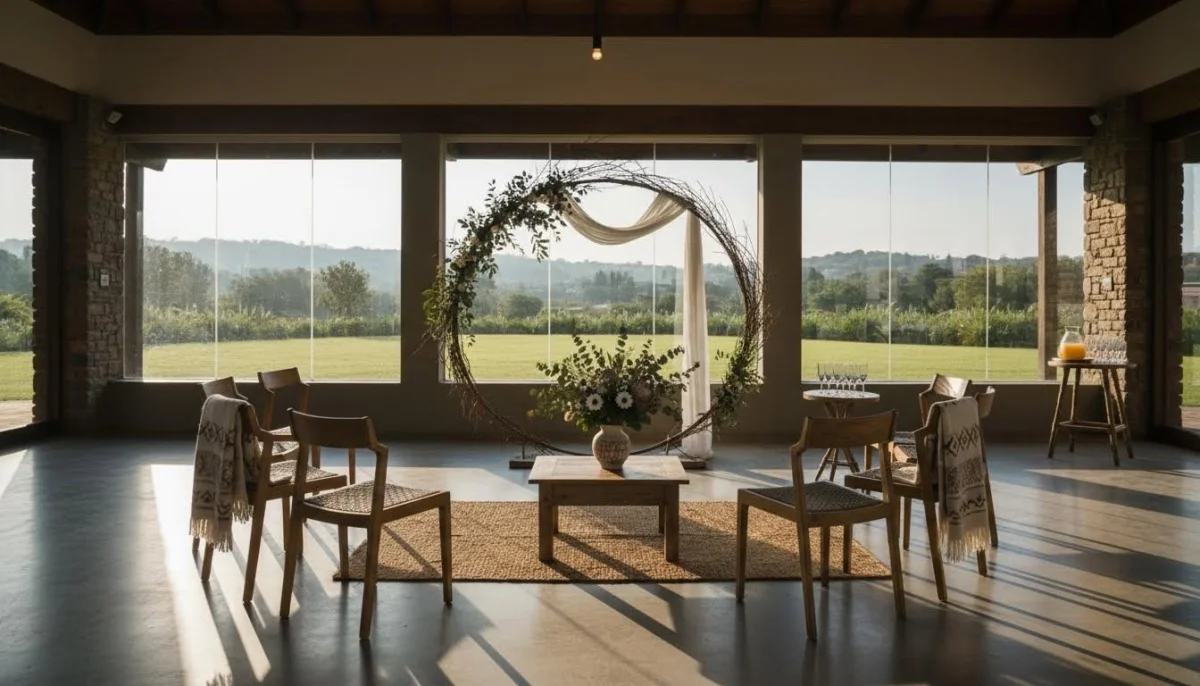
This is where a restrained backdrop can help. Not a shopping mall flower wall. A clean name panel, small florals, fabric, maybe a woven mat or plinth if that suits your family style. It gives the ceremony a centre, especially in a plain school hall or rented community room.
For a professional backdrop or small ceremony styling point, realistic pricing often sits around R4,500 - R12,000, depending on build, florals, delivery, setup, and whether the designer is creating a keepsake name board. It is not essential, but it can make a basic room feel deliberate.
A Guest Should Understand The Day Without Asking
- Arrive and know where to park
- See the welcome point or name display
- Place gifts or books somewhere obvious
- Sit or stand for the ceremony without shuffling furniture
- Eat after the formal moment
- Take photos without blocking grandparents
- Leave before the baby is completely finished with humans
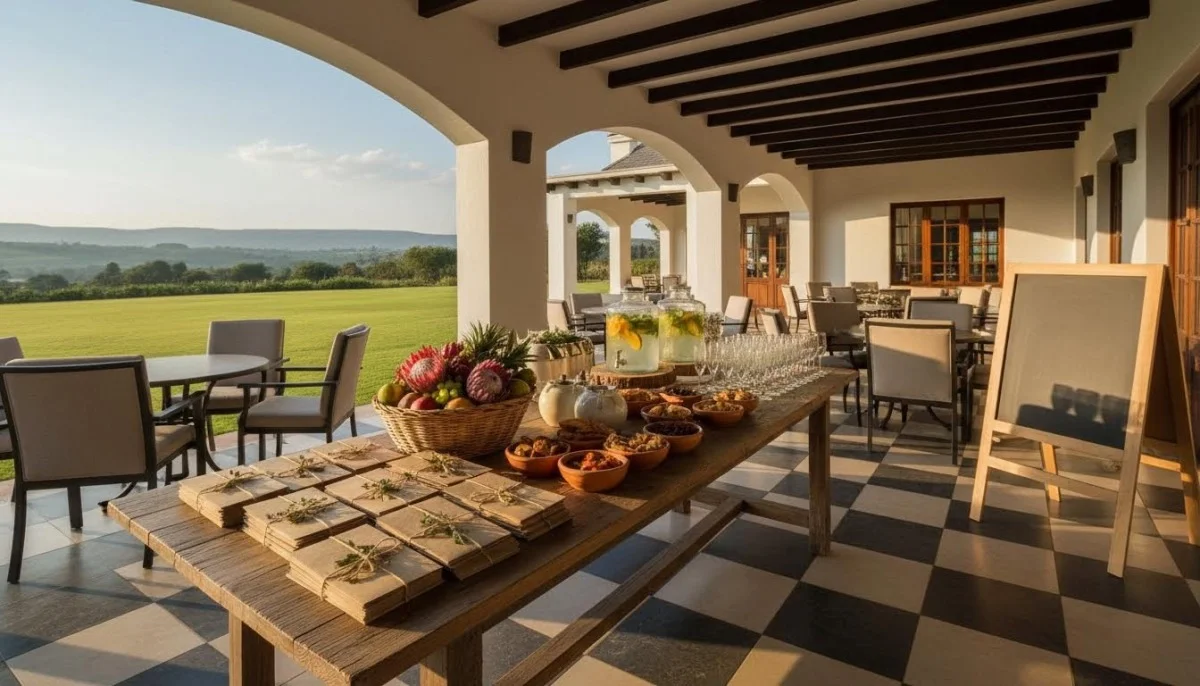
Food should match the time. For an 11 am ceremony, brunch works. For 2 pm, tea, cake, fruit, and savoury bites are enough unless relatives are driving far. If you are booking a caterer, let them handle the main food properly and use small retail or deli extras to fill the table.
Mini samoosas from an Indian deli are excellent for this kind of celebration because they vanish neatly and do not require plates the size of Parliament. Fruit skewers from Food Lover’s Market are also useful for kids, grandparents, and that one uncle who announces he is ‘eating clean’ while staring at the cake.
Catering costs vary wildly, but a proper small-event service for 40 to 70 people can land around R12,000 - R35,000 or more, depending on menu, staff, travel, crockery, and whether you need tea and coffee service. If you are doing supermarket trays around the main food, R600 - R1,200 per tray is a reasonable filler range, not a replacement for feeding everyone.
The RSVP System That Stops Family Admin Eating Your Week

RSVP admin is where naming ceremonies become sneaky work. Everyone thinks it is a sweet little gathering until you are tracking who is vegan, who is bringing twins, who needs halaal food, who cannot walk far, and who replied with a heart emoji but no actual answer.
Use one spreadsheet, even if it is ugly. Name, adults, children, dietary notes, parking needs, gift note, RSVP status. That is enough. Do not build an event management empire unless you enjoy suffering.
- Set the RSVP deadline 10 to 14 days before the ceremony.
- Send one gentle reminder three days before the deadline.
- Ask for children’s ages, not just numbers.
- Confirm dietary needs in writing, especially halaal, vegetarian, allergies, and no pork.
- Keep a separate column for elders who need close seating.
- Update the caterer once, not five times a day.
- Send final arrival details two days before the event.
There is a small tangent here, but it matters. WhatsApp groups are not always evil. For a naming ceremony, a broadcast list is usually better than a group because you avoid twenty people saying ‘Can’t wait’ and one cousin sending a sticker at 6 am. If you need a group for close family logistics, keep it small and mute your expectations.
Your final message should not be poetic. This is not the moment for soft beige language. Say: ‘Please arrive from 10:30 for an 11:00 ceremony. Parking is inside Gate 2. Lunch will follow. Children on the invite are welcome. Message Zee for access issues.’ Done.
Seating, Space, And The Strange Politics Of Who Stands Where

For naming ceremonies, semicircle seating usually works better than rows. It feels less like a lecture and more like family gathering around the child. Keep the baby’s parents, elders, and chosen guardians close to the front, but leave a clear walking line so nobody climbs over a handbag during the blessing.
The seating plan does not need to be printed. It does need thought. Grandparents should not be standing at the back. Parents with toddlers need an edge seat. The person taking photos needs a side angle. If you have a short ceremony mat or table, do not trap the speakers behind decor.
In a school hall, push the formal moment toward one side rather than dead centre if the space is too large. It makes the room feel less empty. In a home garden, face guests away from harsh midday sun. People squinting through blessings look annoyed even when they are not.
For tiny babies, sound matters too. You do not need a full concert setup, but if the gathering is over 50 people or outdoors, consider a discreet microphone and speaker through your venue or supplier. Keep it gentle. A naming ceremony should not sound like prize-giving.
Leave one thing under-explained on purpose: the family order. Every family has its own politics there, and no article can untangle who should speak before which grandmother. Decide privately, tell people early, and keep the ceremony short.
Timeline: Invite Early Enough, Not So Early That The List Mutates

Six to eight weeks is a good window for most naming ceremonies. Longer than that and the guest list starts breeding. Shorter than that and travelling family may struggle, especially if they are coming from another province or need accommodation near the venue.
| 8 weeks before | Choose the date, venue type, and first guest list ceiling. |
|---|---|
| 6 weeks before | Send save-the-date or main invite to close family first if travel is involved. |
| 5 weeks before | Send the full invite and open RSVPs. |
| 3 weeks before | Check numbers, chase key family, confirm ceremony speakers. |
| 14 days before | Close RSVPs and send final numbers to food and styling suppliers. |
| 48 hours before | Send arrival card with address, gate details, start time, and contact number. |
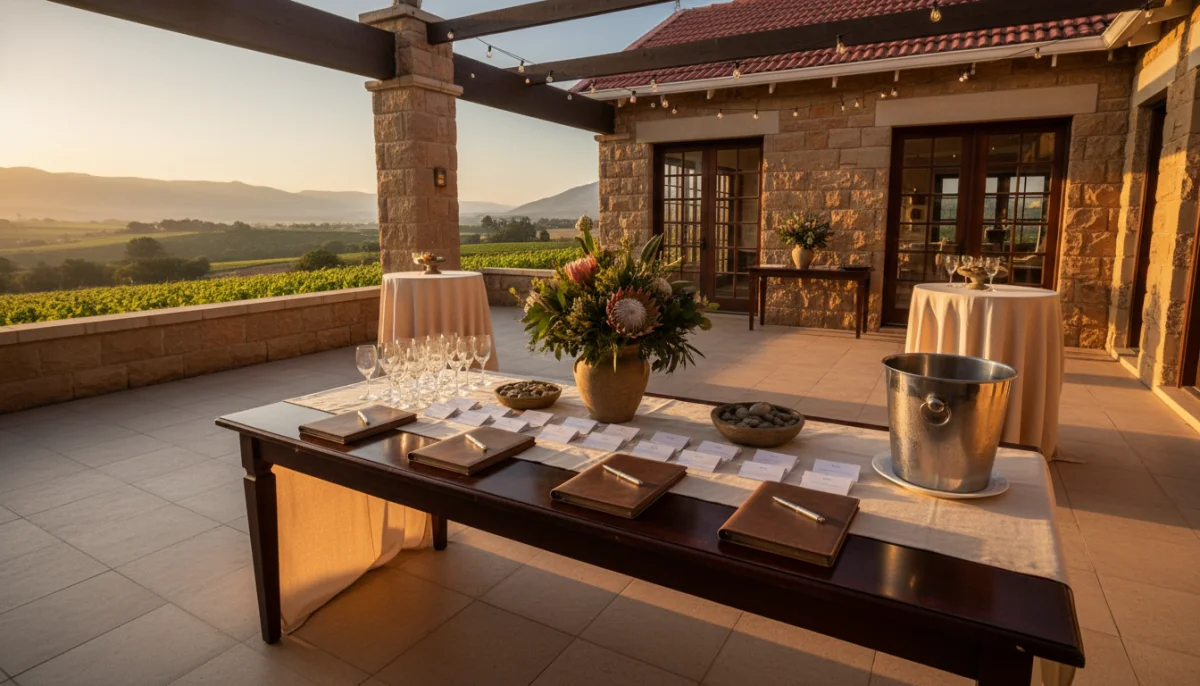
| On the day | Put the guest list at the entrance or with the person handling arrivals. |
For out-of-town relatives, send a private note before the formal invite if accommodation is involved. Do not assume people can travel from Durban to Joburg for a two-hour event without warning. Also, babies change family calendars. A sick week can move everything. Keep your wording warm enough that postponing would not feel like a constitutional crisis.
If you are ordering printed cards, start earlier. Design revisions, proofing, courier delays, and one spelling debate over a middle name can consume a week. I am playfully uncertain about many things, but not about name spelling. Check it like you are applying for a passport.
Tiny Guest Comforts That Make The Invite Feel True


Guests remember comfort in a very physical way. They remember shade, cold drinks, a chair for an elder, food arriving before children unravel, and whether the bathroom had soap. Glamour is nice. Comfort wins.
Match the invite to what you can actually provide. If you say lunch, feed people properly. If you say tea and cake, keep it short and do not let the event drift into supper time. If you invite children, give them somewhere safe to sit, crawl, or escape the speeches. A small blanket corner is sometimes enough.
Gift tables need placement. Put the table near arrival, not next to the ceremony space where people will clatter bags during the naming. If you prefer books instead of toys, place a basket with a note. The note does the awkward asking for you.
Should we invite colleagues to a naming ceremony?
Only if they are genuinely part of your family life. A work friend who brought meals after the birth belongs more than a whole department that only knows the baby from status updates.
Can we send different invites to different groups?
Yes, but keep the facts identical. A formal version for elders and a digital version for friends is fine. Different times or vague guest wording will cause problems.
What if someone asks to bring extra children?
Answer kindly but firmly. If space allows, say yes and update the list. If not, say the venue is at capacity and you are keeping it to named guests.
The Final Guest List Pass Before You Send

Do one final pass before anything goes out. Not a dreamy pass. A boring pass. Count adults. Count children. Count elders who need easy access. Count high chairs if the venue has any. Count the people who will bring gifts, because gift bags take up real space. Count your own emotional bandwidth too, although I never know what unit that is measured in.
Read every name aloud. This helps with spelling, family titles, and the strange moment where you realise you invited one cousin but not their sibling. It is better to fix that at the table than after screenshots start moving through the family.
- The baby’s full name is spelled correctly everywhere.
- The ceremony description matches what will actually happen.
- The guest list has a hard number.
- Each invite clearly shows who is invited.
- The RSVP deadline is visible.
- Dietary notes have a place to go.
- Parking and access details are included.
- Someone besides the parents knows the arrival plan.
- The food order matches the confirmed headcount.
- The photo or backdrop area will not block movement.
If you are using a professional designer or printer, send one final approved PDF to everyone involved and stop editing after approval. Last-minute changes cost money and cause errors. If you change the time after printing, you will end up correcting it on WhatsApp anyway, which defeats half the point of the printed keepsake.
And if the guest list still feels slightly imperfect, welcome to family events. The goal is not a flawless spreadsheet. The goal is a room where the child’s name is spoken clearly, the people who matter are present, and nobody has to ask where to park while holding a gift bag and a sleeping toddler.
Use TimeToParty to find the few suppliers that make the admin lighter and the day feel calmer, from invitation design to a simple ceremony backdrop and proper food service. Keep the guest list tight, send clear details, and let the celebration breathe.

Comments
Join the conversation — no account needed. Comments are moderated before they appear.
Be the first to leave a comment.
Leave a comment