
The first moving-in party I ever respected had no matching décor, no printed menu, and one of those temporary paper blinds still taped to the lounge window. But the food table was clever. Not fancy, clever. Warm pies near the door, cold drinks in a zinc bath, samoosas coming out in small batches, and one auntie standing near the fridge like border control because people kept opening it for no reason.
That is the angle I like for a moving-in celebration: feed people in a way that suits a house that is not fully settled yet. Nobody expects a wedding setup. They do expect enough food, a decent flow through the kitchen, somewhere to put a plate, and a host who is not sweating next to the oven while everyone else admires the tiles.
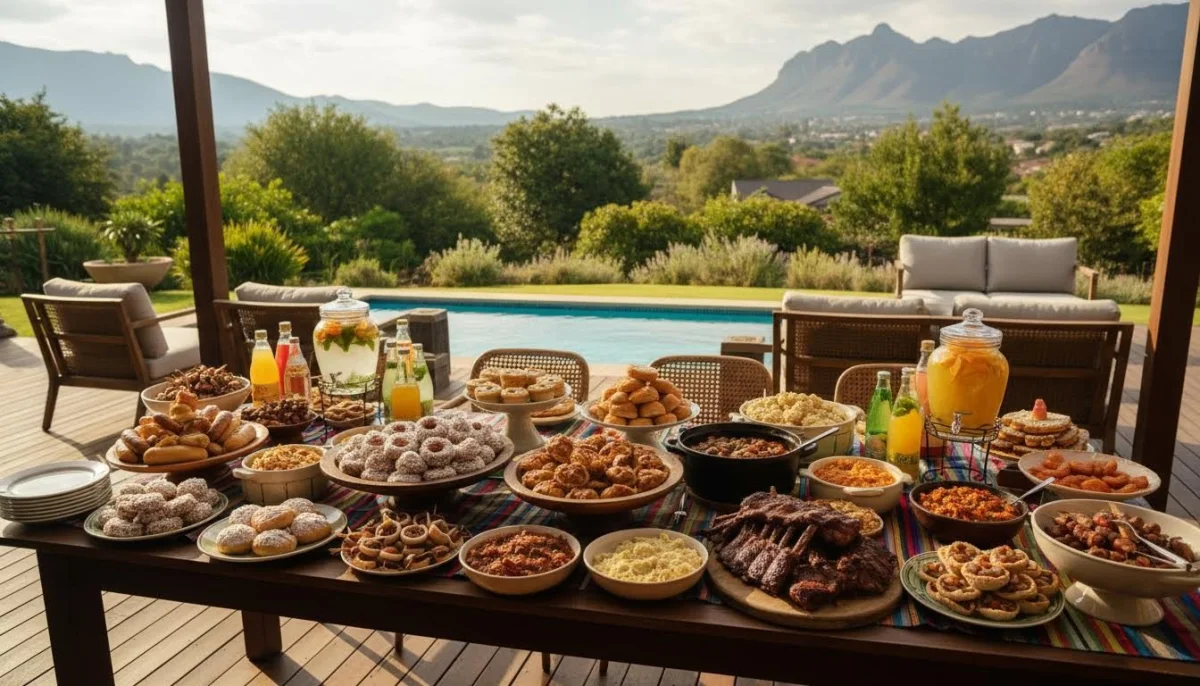
There’s one detail that decides whether guests leave early: the first bite. If people arrive, tour the house, and then wait too long for food, they start standing in doorways, sniffing around politely, saying things like “no man, don’t worry” while absolutely worrying. Rather put something salty and ready out from the start.
A moving-in party is not the time to prove you can cook twelve things. It is the time to prove people can eat without blocking your new kitchen.
Auntie Shireen
Start with the house smell, then build the food around that


Moving-in food should smell like someone lives there already. That does not mean curry steam in every curtain. It means one warm thing, one fresh thing, one crunchy thing, and one sweet thing placed where people naturally pass. A school hall party can hide bad flow because the room is big. An estate clubhouse or townhouse kitchen cannot.
For early arrivals, I like samoosas from a proper Indian deli, not the sad tiny ones that taste like yellow air. Biltong platters from a local butcher hold well and do not collapse if the door stays open. Pepper steak pies from a padstal are excellent if you are driving in from the N4 or a farm stall outside Durbanville. Mini sausage rolls from Checkers are fine as a filler, just put them on a real platter and don’t apologise for them.
Most People Forget
Guests care more about
- Food they can eat while standing
- Cold drinks they can reach without asking
- Clear space for a plate and serviette
- A bin that is not hidden under the sink
Than
- A complicated theme
- Ten tiny garnish bowls
- A formal starter course
- Matching glassware for every drink
Choose one main food spine, not a scattered buffet

The best moving-in spreads have a spine. A braai spine, curry spine, pasta spine, slider spine, grazing spine. Once you choose that, the rest becomes easier and you stop buying random things at Makro because panic has entered the trolley.
If the house has a patio, I would rather go with braai-style food or a food truck outside than a full inside buffet. Blunt opinion: tiny canapé parties in a newly moved house are usually a mistake. People are hungry, they drove from Fourways or Kloof or Bellville, and they do not want one beetroot dot on a cracker.
This is where the first hire can carry real weight. Hires to book: Braai Catering, Food Trucks, Mobile Bars, Party Hire Equipment. Use those exact bookings carefully, not all at once unless the guest list and budget justify it.
A braai caterer makes sense if your family will otherwise take over the tongs and argue about heat. Good Saturday bookings often sit around R9,000 - R25,000 for a proper group, depending on meat, sides, staff, travel, and whether they bring serving gear. That is not cheap, but it buys you a host who can actually show people the new place.
A truck is better for a driveway or estate clubhouse where guests can queue outside and not trample through your kitchen. Expect many proper operators to land around R12,000 - R35,000+ once minimum spend, travel, staff, and menu size are counted. Ask about service speed. A beautiful truck that can only plate one burger every two minutes will test friendships.
| Main food idea | Best for | What to add |
|---|---|---|
| Braai plates | Patios, gardens, bigger family groups | Pap cups, chakalaka, green salad, biltong board from a butcher |
| Curry and rice | Durban homes, winter evenings, smaller lounges | Samoosas from an Indian deli, cucumber sambals, roti triangles |
| Street food truck | Estate clubhouse, driveway party, mixed age groups | Cold drink station, sweet tray, clear queue space |
| Grazing lunch | Cape Town afternoon, wine crowd, smaller guest list | Charcuterie board from a picnic company, fresh bread, fruit |
After a table like this, do not overthink it. Choose one line and commit. My family has a habit of adding “just one more tray” until the table looks like a church bazaar and nobody knows where the plates start.
Snacks that behave well in a half-unpacked home

You want food that tolerates standing, talking, small children brushing past, and someone placing a handbag exactly where the plates were supposed to go. Avoid anything that needs last-second dressing unless you have help. Also avoid too many sauces. New house, new grout, red sauce. No thank you.
- Halaal platters from a mosque caterer for mixed guest lists where you need proper savouries and clear dietary confidence.
- Chicken mayo sandwiches from a padstal if the party starts early and you need something soft, familiar, and filling.
- Mini burgers and sliders from a food truck if you want the main food to feel fun without turning the kitchen into a serving line.
- Charcuterie grazing boards from a picnic company for a lounge or balcony party where people will nibble over two hours.
- Brownie platters from an artisanal bakery because one square of proper brownie does more work than six cheap sweets.
- Popcorn buckets from a cinema candy shop if there are children and you need a dry snack that can sit out.
There is a tiny smell test I use, and it sounds fussy but it works. If the snack smells oily before it reaches the table, it will smell worse after two hours near a sunny window. Rather keep fried items in smaller batches and refresh quietly.
Drinks need a station, not a fridge queue


People will forgive a small lounge. They will not forgive warm drinks. For a moving-in party, I like a drinks point outside the main kitchen line: a bar table on the patio, cooler boxes under shade, water visible, and one bin for bottles that is not a sad plastic packet hanging from a handle.
A staffed bar is one of the few luxuries that genuinely changes the host’s day. Proper mobile bar bookings often run R8,000 - R22,000+ depending on staff, hours, glassware, mixers, travel, and whether alcohol is included. It keeps cousins from free-pouring gin like they are at a matric after-party.
For non-alcoholic drinks, do one grown-up option. Not six. Rooibos iced tea with lemon, a ginger cordial jug, or a soda water and fruit station is enough. If there are children, add boxed juices and label a low shelf or tub as theirs, otherwise they hover under elbows.
A small tangent about ice
Buy more ice than your sensible brain says. Ice disappears into coolers, glasses, someone’s sprained ankle, and one uncle’s idea of keeping beers “properly cold”. I do not know where it goes, but it goes.
Set the eating zones before the food arrives

I know we are talking food, but food fails when there is nowhere sensible to eat it. You do not need a formal seating plan for a moving-in party. You do need enough surfaces at elbow height and a few seats for older guests who will never complain until their knees do.
If you are short on furniture, hiring serving tables, cocktail tables, benches, and extra glassware through a party equipment supplier is cleaner than borrowing random pieces from five relatives. Proper small home setups can sit around R4,000 - R14,000+ depending on quantities, delivery, collection, linen, and breakage deposit.
Just make sure the eating zones match the food. Curry needs proper bowls and spoons. Braai plates need knives that can cut meat without bending like a garage special. Sliders need serviettes in more than one place. Grazing boards need small plates, not dinner plates that swallow the table.
- One main food table away from the oven and sink
- One drinks station outside the kitchen path
- One sweet tray away from direct sun
- Two bin points, one near drinks and one near food
- A chair cluster for grandparents and tired parents
- A refill box hidden nearby with serviettes, plates, and toothpicks
- A clear spot for gifts, plants, wine bottles, and housewarming cards
The oddly specific thing I always notice: there is usually one parent balancing a paper plate on top of a pram handle while trying to stop a toddler from eating a decorative pebble. Give that person a surface. Any surface.
Dessert should be neat, sweet, and not needy


Dessert at a moving-in party should not need ceremony. You are not cutting a three-tier cake under Nu Metro lighting. Put out sweet things in small pieces, refill once, and let people help themselves. If someone brings a cake from the Checkers cake counter, smile and make space. Free cake is still cake.
Good options: mini eclairs from a French pâtisserie if you want something pretty, koeksisters from a padstal if you want sticky nostalgia, and cannoli from an Italian bakery if your crowd likes a crisp shell. If it is a Durban afternoon, keep chocolate-heavy items inside. Humidity is disrespectful.
For children, a popcorn machine can be useful if the guest list includes a pack of small people who need something repetitive and dry. Proper weekend hire often lands around R2,500 - R6,500+ once delivery, kernels, staff or cleaning, and timing are included. It also creates a smell that makes the house feel festive without frying anything.
A simple food timeline for the day

I claim to be relaxed about hosting, then I write timings on masking tape and stick them inside a cupboard door. It helps. Nobody sees it, and you do not have to keep asking yourself whether the pies are in yet.
| One day before | Clear fridge space, borrow or hire serving gear, collect shelf-stable snacks, label refill boxes. |
|---|---|
| Morning | Collect bakery items, confirm caterer or truck arrival, set up bins, drinks tubs, and plate stacks. |
| One hour before | Put out dry snacks, chill drinks, check shade, move handbags and boxes out of the food path. |
| Guest arrival | Serve the first salty bite immediately. Do not wait for everyone. |
| Main food | Open the main food line before people become too polite to say they are hungry. |
| Last hour | Bring out dessert, coffee if you are doing it, and pack leftovers before the kitchen turns into a second party. |
The line I under-explain on purpose: pack leftovers before the second wave of gossip starts. You will know the moment.
How the food should move through the party
- Guests arrive and take a savoury snack near the entrance
- They tour the house with something in hand
- Drinks pull them outside or away from the kitchen
- Main food opens before hunger gets dramatic
- Dessert lands quietly while conversations are already warm
- Leftovers get boxed before everyone suddenly needs containers
Quick answers before you start shopping

How much food should I plan per person?
For a two to three hour moving-in party, plan one main serving per adult, plus three to five snack pieces. Add more if alcohol is served or people are arriving around lunch or supper.
Should I cook myself?
Cook one signature thing if you want to, but do not cook the whole party unless you have proper help. A moving-in house still has surprise problems hiding in cupboards.
Can I ask guests to bring food?
Yes, but be specific. Ask one person for salad, one for dessert, one for ice. If everyone brings chips, you will have a crunchy mountain and no meal.
If your budget is tight, spend on the main food first, then drinks, then surfaces. Décor can wait. A clean tablecloth, decent serving spoons, and food that arrives on time will beat twelve little themed signs every single time.

This is the part people remember, standing with a plate, seeing the new place, asking which wall is coming down, smelling coffee from somewhere, and deciding they will stay a little longer. Not because the menu was clever. Because it was easy to enjoy.
Auntie Shireen’s final moving-in food checklist
Do this in order and you will feel much calmer. Not perfectly calm, because the doorbell will ring while you are still moving a box of extension cords. But calmer.
- Choose one main food spine: braai, curry, truck food, grazing, or simple lunch plates.
- Book only the hired help that carries the day, not every nice extra you see online.
- Confirm arrival times, staff numbers, service length, and what serving gear is included.
- Buy first-bite snacks: samoosas, biltong, pies, sandwiches, or popcorn.
- Set drinks away from the kitchen, with water visible and ice handled early.
- Place bins where people actually stand, not where you wish they would walk.
- Create eating surfaces for standing guests, parents, and older relatives.
- Keep dessert low-maintenance: brownies, koeksisters, eclairs, cannoli, or a simple cake.
- Pack a refill box with serviettes, small plates, toothpicks, foil, tape, and a black marker.
- Clear the fridge of moving-week leftovers before guests arrive.
- Put one towel or paper towel roll near the drinks area.
- Box leftovers before the final hour becomes container negotiation time.
For a moving-in celebration, choose a generous main food idea, add snacks that behave, and hire the few services that keep you out of the kitchen. Then open the door, feed people early, and just make sure the bin is not hidden.

Comments
Join the conversation — no account needed. Comments are moderated before they appear.
Be the first to leave a comment.
Leave a comment