
Human Rights Day can become very stiff very quickly if the plan is speeches, a tray of samoosas, and a microphone that smells faintly of storage cupboard. I say that with respect. I have attended those gatherings. People behave nicely, nod at the right moments, and then ask where the cooldrink is.
A workshop format works better because guests are asked to do something. Not perform. Not embarrass themselves. Just take part. A poster-making table, a storytelling circle, a rights quiz, a short community mapping activity, a mural panel, a letter-writing station for a local cause. It feels more alive without becoming a loud youth-camp situation.
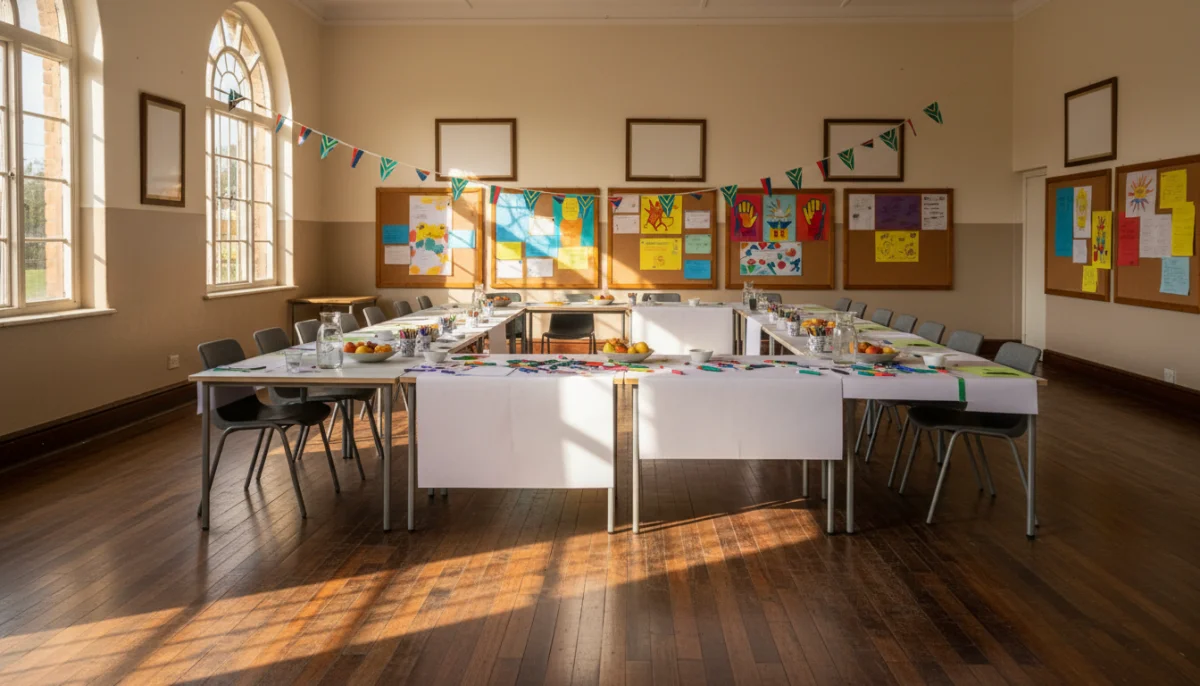
Keep the first visual simple. A long table, neat stationery, a few printed prompts, and enough light for people to read without leaning like pensioners over a municipal form. You do not need a stage for the whole thing.
What should the workshop actually be?
Pick one core activity. One. The Human Rights Day theme is already serious enough, so the structure must be plain. A community rights map is a good option for mixed ages because people can point to schools, clinics, taxi ranks, parks, libraries, and places where dignity either feels protected or ignored.
A storytelling workshop also works, especially for families. Ask older guests to bring one memory from 1994, school protests, forced removals, first voting queues, old civic meetings, or a moment when they realised fairness was not just a word in Life Orientation. Younger guests can respond with drawings, audio clips, or short written reflections.
The best workshop is not the cleverest one. It is the one your auntie from Benoni and a Grade 8 learner can both enter without needing instructions twice.
Zee Mthembu
- Choose one topic: dignity at school, access to services, freedom of speech, safety in public spaces, or belonging.
- Set one output: a wall of pledges, a short booklet, a shared mural, a recorded message board, or a group discussion summary.
- Keep the first task under five minutes so late arrivals can still join.
- Print prompts in large type. Please. Nobody wants to squint under fluorescent tubes.
- Use one facilitator per 20 to 30 guests if the room is busy.


The few hires that genuinely help
Hires to book: Interactive Entertainment, PA Systems, Event Stylists.
That is enough. More than that and the gathering starts looking like a mall activation, which is my blunt opinion and I am not softening it. Human Rights Day does not need a confetti cannon.
A good facilitator is the one hire I would protect first. You want someone who can run a room without sounding like a training video. For a half-day community workshop in Joburg, Pretoria, Durban, or Cape Town, proper facilitation with materials planning often sits around R9,000 - R25,000 depending on preparation, staff, travel, and whether they build the activity from scratch.
Sound matters more than people admit. A decent microphone and speaker setup keeps the welcome short, the instructions clear, and the reflections audible. For a medium hall or clubhouse, budget roughly R6,500 - R14,000 for proper sound, delivery, setup, and a technician if the programme has multiple voices.

The microphone is not decoration. If people cannot hear the instruction, they will form little side conversations near the tea station and your workshop becomes background noise. Also, keep the speaker away from the children’s drawing table if you value concentration.
How to make it look respectful, not corporate cold
This is where the room needs restraint. A stylist can help with table layout, cloths, signage placement, display boards, and lighting. Not everything has to be beige and expensive, but it should look intentional. For a smaller public-facing event, styling support often lands between R12,000 - R35,000, more if custom boards, florals, furniture, and full setup teams are involved.
I prefer warm light for this kind of gathering. Bright white light makes every community hall feel like a clinic waiting room. Amber lamps, uplights against a brick wall, or soft overhead lighting can make a rights wall feel solemn without becoming gloomy.
| Element | Keep it simple | Spend where it matters |
|---|---|---|
| Seating | Chairs in small clusters or semi-circles | Comfort if the programme runs longer than two hours |
| Activity tables | Brown paper, markers, tape, printed prompts | Neat setup, enough space, no overcrowding |
| Display area | One pledge wall or mural board | Good lighting and clear sight lines |
| Welcome area | Sign-in sheet and name tags | A calm person greeting guests properly |

There is one detail that decides whether guests leave early: pacing. Not the logo wall. Not the welcome speech. Pacing.
A Human Rights Day flow that does not drag
The workshop should open quickly. People have parked badly, greeted four cousins, checked the programme, and maybe spotted someone they used to work with at Telkom. Do not make them sit through 35 minutes of formalities before they touch a pen.
| 10:00 | Arrival, tea, name tags, quiet browsing of the prompt wall |
|---|---|
| 10:20 | Short welcome and why the workshop matters |
| 10:30 | First activity: map, mural, story card, or pledge note |
| 11:05 | Small group sharing with one facilitator moving between tables |
| 11:35 | Snack break and informal viewing of the work so far |
| 12:00 | Final group reflection, two or three voices only |
| 12:20 | Group photo if appropriate, then lunch or goodbye |

I once misread my own running order at a civic event and introduced the tea break as if it were a guest speaker. It was mildly embarrassing. The tea still arrived, so the room forgave me.
Food should support the workshop, not hijack it
Keep the food easy to hold and easy to clear. If the main programme is reflective, do not serve anything that requires a knife, dripping sauce, and a full explanation from the host. Mini curry bowls from a Durban caterer can work beautifully after the main activity, especially if the event runs into lunch.
For a morning programme, mini milk tarts from a local bakery are safe, nostalgic, and not messy. Put them away from the workshop papers. I have seen icing sugar settle on black tablecloth like evidence.
Most People Forget
Guests care more about
- A drink within the first 20 minutes
- A clean place to put their plate
- Food that does not interrupt the activity
Than
- A complicated menu
- Ten decorative food labels
- A dessert table before the work begins


But will teenagers stay engaged past 30 minutes?
Possibly. Not if they are treated like décor. Give them a defined role: record short audio reflections, photograph the finished wall, run the timer, help elders write cards, or lead a rights quiz round. A Nu Metro ticket giveaway is not a programme, although I understand the temptation.
Teenagers are sharper than many adult hosts allow. Give them a question with bite: where do young people feel most unheard in this suburb, school, taxi route, church, sports club, or online group? Then let them answer without a committee correcting every sentence.
The Workshop Rhythm That Usually Holds
- Guests arrive and see the activity already waiting
- The welcome is brief and clear
- People start with an easy individual task
- Tables compare answers without a formal debate
- The room pauses for food and viewing
- A few reflections close the gathering while attention is still alive

What to print, prepare, and leave slightly imperfect
Print the programme, the workshop prompt, the venue map if needed, and a simple sign for each station. Use plain language. If the activity needs a facilitator to explain every line, the printed copy has failed.
A school hall is still one of the most useful venues for this kind of event. It has space, stackable chairs, toilets nearby, and usually one very strict rule about Prestik on painted walls. Respect that rule. Somebody from the SGB will appear with a face.
- Use thick markers because pale kokis disappear under hall lighting.
- Keep spare pens in two places, not one.
- Put the pledge wall where guests naturally pass it, not behind the registration table.
- Have one clipboard for late RSVPs and one for media permission if you are filming.
- Keep a rubbish bag visible but not in the photos.
Final checks before guests walk in
Walk the room as if you are a guest arriving alone. Can you see where to go? Can you hear the person at the front? Can you tell what the activity is before someone explains it? If yes, you are mostly fine.
How long should the workshop be?
For mixed-age groups, 90 minutes of real activity is usually enough. Add arrival, snacks, and closing remarks around it.
Should we have speeches?
Yes, but keep them short. One meaningful welcome and one closing reflection are better than six polite speeches.
Can this work at an estate clubhouse?
Yes, if you control noise and seating. Clubhouses are good for smaller groups, but they can feel casual, so use signage and lighting to give the day weight.

This is the dull part, but it saves the host. Registration, labels, pens, and a simple programme calm the entrance before the proper work starts. Do not overdesign it.
Back to the original point: interactive workshops work because they ask guests to contribute, not merely attend. That is a strong fit for Human Rights Day. It honours the subject without turning the room into a lecture hall.
Choose the workshop first, then book only the support that protects it: facilitation, sound, and a clean visual setup. Keep the food practical, keep the light warm, and let the guests do some of the talking.
Comments
Join the conversation — no account needed. Comments are moderated before they appear.
Be the first to leave a comment.
Leave a comment