
The funny thing about a small party is that the venue gets exposed.
With 120 guests, people forgive weird corners, ugly tiles, and one auntie shouting across the room because nobody can hear properly. With 22 people, everyone notices the echo, the cold lighting, the awkward dead table by the toilets, and the fact that the cake stand is sitting under a laminated fire extinguisher sign.
So choosing the venue is not about finding the fanciest place. It is about finding the place that makes a small group feel full, comfortable, and slightly pleased with themselves. A birthday dinner in Rosebank, a baby shower at an estate clubhouse in Midrand, a 40th in a Durban North garden room, a family lunch at a school hall side room, they all need the same basic thing: the room must not fight the party.
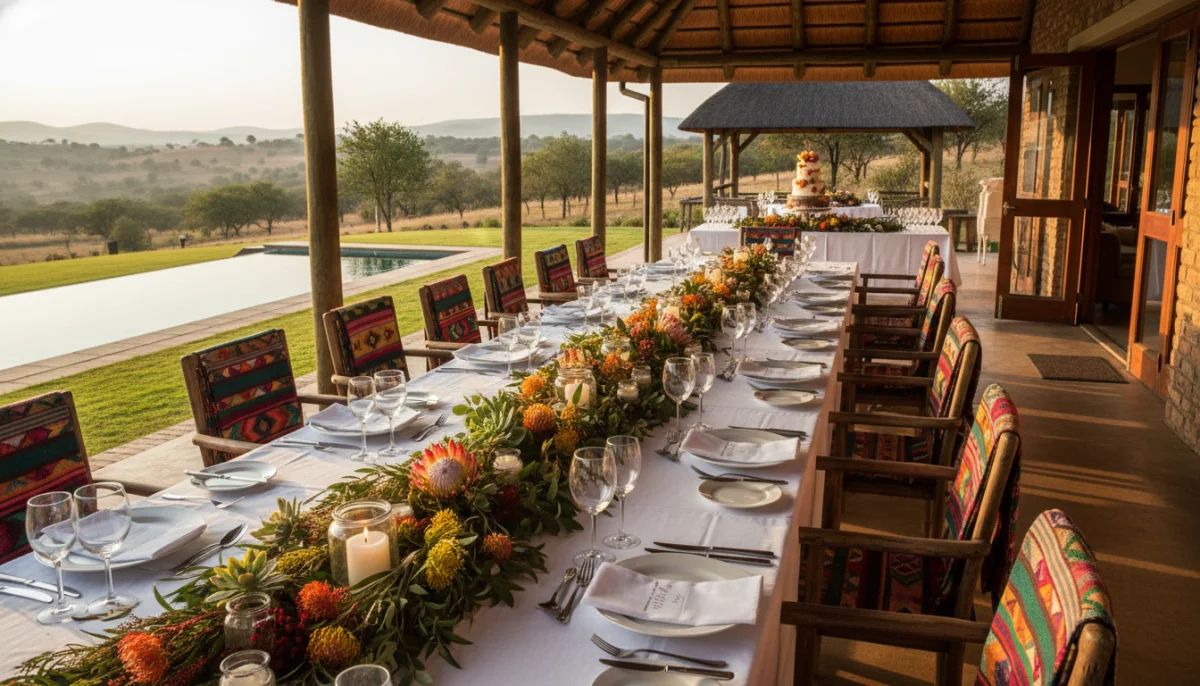
A good small venue should feel almost too small before guests arrive. Empty rooms lie. Once bags, prams, flowers, gift bags, and one cousin’s camera tripod appear, the room becomes honest.
What size actually feels right for a small party?
Smaller than your panic thinks.
A room that seats 40 can feel polite with 25 guests. A room that seats 80 can make 25 guests look like they arrived early for a church committee meeting. I know people love breathing room, and yes, nobody wants to elbow a glass of Appletiser into a handbag. But too much empty space drains a small celebration.
Blunt opinion: if your guest list is under 30, a huge hall is usually a bad idea. Unless you are bringing in serious styling, warm lighting, and a clever floor plan, the room will make your party look under-attended, even if everyone you invited came.
Most People Forget
Guests care more about
- Chairs close enough for normal conversation
- A drinks spot that is easy to reach
- Soft light on faces
- A food table that does not block the entrance
Than
- A venue with a massive capacity
- A dramatic staircase nobody uses
- Complicated centrepieces
- A stage for a party with no stage moment


Will the room carry conversation, or swallow it?
There’s one detail that decides whether guests leave early: how easy it is to talk without performing.
For a small party, sound matters before music matters. A tiled restaurant section in Sandton can look expensive and still punish conversation. A garden patio in Pretoria can be lovely until the neighbouring table starts singing along to a rugby post-match interview. You do not need total silence, that feels weird too. You need a soft buzz.
The best test is boring. Stand in the middle of the space and speak at normal volume. If your friend three metres away starts doing that polite church-smile squint, the room is too loud or too echoey.

This is where I like one smart hire, not a shopping list. Hires to book: Venues, Lighting Hire, Buffet Catering.
A proper space provider should tell you the capacity, noise cut-off, parking situation, kitchen access, what time setup starts, and whether outside food is allowed. If they are vague on all of that, pause. Pretty photos do not answer questions. I am slightly unsure why some venues still act offended when you ask about plugs, as if a plug point is a family secret.
Think about the first 20 minutes, not the whole afternoon
Small parties are decided early.
If the first few arrivals walk into an empty room with no clear drinks point and no one knows where to put gifts, the party starts stiff. That stiffness takes ages to leave. My family has a habit of arriving in clusters, then hovering near the entrance like they are waiting for Home Affairs to call a number. Give people an obvious first move.
| 0 to 10 minutes | Host greets, drinks are visible, bags and gifts have a home. |
|---|---|
| 10 to 25 minutes | Guests find seats or stand naturally near the food, not in the doorway. |
| 25 to 45 minutes | First snack lands. People stop checking if they are too early. |
| After 45 minutes | Speech, cake, toast, trivia, or whatever small moment gives the party shape. |

I do not really follow trends, except I have eyes, so yes, I’ve noticed the current small-party thing: private rooms with one long table, low flowers, and one clean cake moment for photos. It works because it gives the party a spine. People know where to sit, where to look, and when to stop wandering.
The odd little venue checks
- Can guests find the room without phoning you from the parking lot?
- Is there one table near the door for gifts, not the cake table doing unpaid labour?
- Will older guests manage the stairs and bathroom route?
- Does the venue allow candles or only battery ones?
- Can you control some lighting, or is it full dentist-mode all night?
- Is the toilet close enough, but not visually starring in every photo?
One oddly specific thing: some estate clubhouses have a rule about confetti that includes tiny paper circles, dried leaves, and even biodegradable bits. The laminated notice is usually taped near the kitchen hatch, slightly curling at the corners.
Food tells you if the venue is practical
A small venue can be beautiful and still be wrong if the food has nowhere sensible to go.
For a small party, I prefer one good food station over scattered nibbles everywhere. It keeps the room alive. Guests move, refill, talk, and sit down again. If the venue has a sideboard, counter, or small patio ledge near the seating area, that is useful. If the only food surface is across the room under the aircon drip, no.
| Venue setup | What it means for your party |
|---|---|
| Private restaurant room | Easy service, fewer setup worries, but menu choices may be fixed. |
| Estate clubhouse | Flexible and familiar, but you may need to arrange serving tables and clean-up. |
| Home garden or patio | Warm and personal, but weather and bathrooms become part of the plan. |
| Small hall or community room | Affordable for the space, but lighting and food flow need attention. |

Food placement is not glamorous, but it decides movement. Put snacks where people can approach from two sides if possible. A single tight corner creates that little plate queue where someone always drops a serviette into the chutney.
If you are using a caterer, ask how they serve in a tight room. A buffet can be excellent if there is space on both ends. If there is not, plated service or family-style sharing might be calmer. For a 30th in Parkhurst, I once saw guests circle a buffet table like traffic at a four-way stop because the room had no second access point. That is not a disaster story. It is just geometry being rude.
Snack ideas that feel local and do not pretend to be fine dining: samoosas from a Durban curry shop, rustic bread boards from an artisanal bakery, and donut walls from a local bakery if the birthday person likes a sweet photo moment. Choose one or two. Nobody needs seven carbohydrate personalities at one table.
What should you hire, and what should the venue already have?
This is where people accidentally spend money twice.
Before paying deposits, ask what is included. Tables, chairs, basic tablecloths, glassware, ice buckets, a speaker, a staff member on site, cleaning, security at the gate, parking direction. Some venues include enough to make life easy. Others include the room and a shrug.
A small venue should reduce decisions, not create 19 new WhatsApp groups.
Tyrese, after seeing too many host spreadsheets
If the room is plain but well located, lighting can rescue it. Warm uplighters, a few lamps, or soft wall washes make people look relaxed in photos and help the space feel less municipal. Expect proper lighting support for a small event to sit around R6,000 - R15,000 depending on delivery, setup, number of fixtures, and how fussy the room is.
For food, a reliable buffet or grazing-style service for a smaller adult party can easily land around R250 - R550 per person before extras, staff, and travel. More formal menus go higher. This is where the budget goes, and that is not a bad thing. Guests forgive simple decor faster than dry chicken.


I would rather have a simple room with good chairs, flattering light, and food arriving on time than a wildly themed setup where nobody knows where to put their handbag. Simplicity is not boring. It is just less likely to betray you.
The last-minute change test
Plans change suddenly. This is not pessimism, this is South African hosting.
Someone adds a plus-one. A toddler needs a nap corner. Rain starts at 14:40 after the weather app lied with confidence. The birthday person decides, on the morning, that they do want a speech after saying for three weeks that speeches are cringe. Your venue must absorb small changes without everyone staring at you.
A small party that survives a change
- Guests arrive and see where drinks are
- The seating still works if two extra people come
- Food can move indoors if weather turns
- The host has one quiet corner for gifts or bags
- The cake moment happens where light is decent
- People leave feeling like the room was chosen on purpose

Ask the venue one simple question: if we need to move everything inside in 20 minutes, what happens? The answer tells you more than the brochure. If they point to a cramped passage with stacked mop buckets, you have your answer.
Should you choose a restaurant, clubhouse, hall, or home?
There is no winner. There is only what your group will actually enjoy.
Restaurants are easiest for hosts who do not want to manage plates, staff, bins, or ice. Clubhouses are great for family parties because kids can move a bit and older relatives understand the setup. Small halls work when you want control, but they need effort. Home is intimate, and then suddenly you are hiding laundry in the main bedroom and asking people not to use the bathroom with the broken handle.
Is a restaurant private room worth it for 15 to 25 guests?
Usually yes, if the minimum spend is realistic and the room closes properly. A half-private corner beside the main dining area can feel exposed.
Can I use a school hall for a small party?
Yes, but use only part of it if possible. Pull seating closer, soften lighting, and avoid placing guests in the middle of a huge empty floor.
How early should I book?
For weekend dates in Joburg, Pretoria, Cape Town, or Durban, start six to ten weeks ahead. Popular restaurants and estate clubhouses go quickly.

Also, check parking like a normal person with a car, not like someone browsing venue photos at midnight. If guests have to park three streets away in heels, the venue has already spent some of your goodwill. This matters even more for older relatives, pregnant guests, and anyone carrying a cake from the Checkers cake counter because the original cake plan changed at 10 AM.
My quick venue scorecard
Use this before you fall in love with the archway, the mural, or the moody bathroom mirror.
| Question | Why it matters |
|---|---|
| Does the room feel warm at your actual guest count? | Small parties need density without discomfort. |
| Can people talk easily? | If conversation is hard, guests get tired fast. |
| Is food service simple? | Awkward food flow makes the whole party feel clumsy. |
| Is there a weather or change backup? | Last-minute changes should not wreck the setup. |
| Are the included items clear? | You need to know what you are paying for before you add suppliers. |
If a venue scores badly on conversation and food flow, I would walk away. You can fix plain walls. You can fix a boring table. You cannot easily fix a room where nobody can hear the toast and the buffet queue blocks the only door.

The cake spot should not be an afterthought. Window light is kind. Downlights from directly above are rude. Put the cake where guests can gather for two minutes without blocking waiters or the bathroom.
The right small venue does not need to impress everyone on Instagram. It needs to make your real people relax. The auntie who wants tea. The cousin who hovers near snacks. The friend who arrives late and still needs a chair that does not feel like punishment.
For a small party, book the space that helps the afternoon along: easy talking, easy eating, decent light, and enough flexibility for one last-minute wobble. If it feels warm before the decor arrives, you are probably close.
Comments
Join the conversation — no account needed. Comments are moderated before they appear.
Be the first to leave a comment.
Leave a comment