
Who is actually coming, and are they going to read?
Is everyone arriving with a marked-up copy of Dracula? Or are three people coming straight from work, one person pretending to have read Rebecca, and your cousin bringing someone who thinks gothic means black lipstick and Evanescence?
That matters because a gothic literature book club night is not a normal supper. It needs low light, proper chairs, slow drinks, a host who can steer the chat, and enough food that people do not start chewing ice at 9 pm. The hires I would spend on first are the lighting, the seating, the bar setup, catering, printed or filmed invites, a small sound setup, and one visual souvenir. You can add theatrical clothing if your crowd will play along.
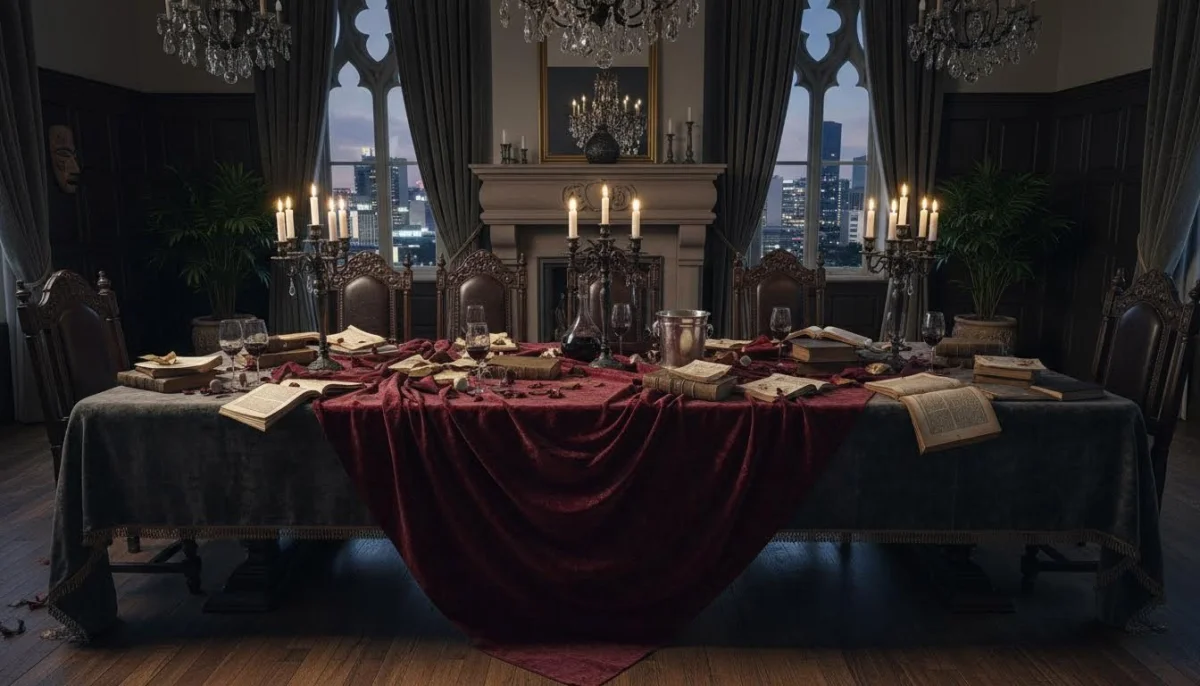
Blunt opinion: a gothic book night with white ceiling lights on full blast is dead before the first quote is read. I do not care how nice your table runner is.


The working shortlist
For directory matching, the seven hire types I would use are Video Invitations, Rustic Styling, Mobile Bars, Catering & Drinks, PA Systems, Photographers, and Costumes. That is enough. More than that and the night starts looking like a matric dance trying to quote Edgar Allan Poe.
If you only have budget for three paid elements, go with styling, drinks, and a small audio setup. Food can be scaled. Clothing can be encouraged. But bad light and bad sound make even clever people drift.
The room must look old, but not dusty
A dark academia night works best in a lounge, dining room, estate clubhouse, small private room at a restaurant, or a school hall that has been bullied into behaving. A school hall is not romantic, but with the right corners dressed and the lights kept away from the ceiling, it can work. I have seen uglier places saved by warm lamps and heavy tablecloths.

Ask the stylist for zones, not just a table. You want a reading corner, a drinks point, a main discussion circle, and one photo area. Four good zones beat twenty little bats taped to a wall.
The odd little detail I always notice at these things: someone leaves a packet of blue firelighters or a bright orange extension cord visible under the drinks table. It ruins the scene because your eye goes straight there.
Styling for a small adult book night is usually not cheap if you want it done properly. For a lounge or clubhouse setup, expect R9,000 - R25,000 depending on furniture, props, labour, delivery, and how far the supplier travels. If there is a staircase, lift restriction, or security gate drama, ask early. Venues in Sandton estates and Durban North complexes love a rule sheet.
| Spend on | Why it works | What to ask |
|---|---|---|
| Warm table lamps | Faces look better and guests can still read passages. | Ask if lamps are included or if you must supply plug points. |
| Dark linen and runners | They hide normal venue tables and make the book covers pop. | Confirm sizes before you pay. |
| Aged books and brass pieces | They give the table depth without screaming Halloween. | Ask how many prop pieces are included. |
| A small backdrop corner | People want one good photo, not a whole stage set. | Ask for a sample photo from a real setup. |
There is one detail that decides whether guests leave early, and it is not the book choice. I will get to it after the drinks, because drinks are where hosts often overspend badly.
The bar should be quiet, dark, and fast
You do not need a club bar for gothic literature. You need a compact bar with glassware, ice, a bartender who can handle a queue, and two or three drinks that fit the night. Red wine, smoky whisky cocktails, a non-alcoholic blackcurrant spritz, and water that is not hidden in the kitchen. That is enough.

A proper mobile bar service for 20 - 40 adults can land around R8,500 - R22,000 before premium alcohol, depending on staff, bar counter, glassware, garnish, ice, and duration. If you add craft cocktails, the number moves quickly. That is not the place to act shocked on the quote. Alcohol service has labour and stock risk, and someone must keep the ice from turning into a sad plastic bath.
- Ask if glassware is real glass or polycarbonate. For a gothic table, real glass looks better, but some venues ban it near pools.
- Ask if ice is included. If not, assign it to one person and make it boringly clear.
- Ask whether the bartender clears empty glasses. Some packages do, some absolutely do not.
- Ask if they bring black cloth, a bar front, and bins. Bins matter. Sorry, but they do.
- Ask about overtime in writing. Book club people say they will leave at 10 pm, then suddenly argue about Heathcliff until midnight.
For a winter Joburg night, I like one warm drink on the menu. Hot spiced rooibos with brandy on the side works if your crowd is older than 30 and not trying to be too cool. For food nearby, droëwors cups from a good butcher work better than you think because people can nibble while holding a glass.
Food must arrive before the first serious argument
Book the caterer for the actual meal or proper substantial platters, then fill small gaps yourself. Do not make your guests survive on olives and one cheese triangle while you debate unreliable narrators. Hungry readers become sharp, and not in a useful way.

For 20 - 35 adults, proper catered platters and a styled grazing table often sit around R7,500 - R20,000 depending on protein, delivery, staff, and presentation. Add more if you want warm food served properly. Add even more if the venue has no kitchen access.
Good food for this theme is darker, richer, and easier to eat with one hand. Mini pies, cheese, figs, grapes, olives, roasted mushrooms, little beef sliders, and samoosas all behave. Butter chicken samoosas from a Durban curry shop are a strong move if your guest list can handle spice. Do not serve spaghetti unless you want red sauce on borrowed velvet.
| Food idea | Source | Why it fits |
|---|---|---|
| Butter chicken samoosas | Durban curry shop | Warm, filling, and still easy to eat during a discussion. |
| Pepper steak pies | Padstal or local bakery | Good late-night filler when the wine starts working. |
| Camembert bake trays | Artisanal deli | Looks generous without needing a full plated meal. |
If you are using a restaurant private room in Rosebank or Umhlanga, ask about outside food before you promise your cousin she can bring a cake. Some venues are relaxed, others treat an outside cheesecake like a border incident.
Seating decides how long people stay
This is the detail I mentioned earlier. Chair comfort decides the length of the night. Not the playlist. Not the gothic menu name. If people are perched on hard plastic for two hours, they start checking phones and making school-night noises.

I like a circle or horseshoe setup. Not a boardroom line. A boardroom makes guests report back like they are in a quarterly review. A circle lets quieter people join without performing. Keep the main discussion group under 18 if you want real conversation. If you have more people, split into two circles after food and bring everyone together later for the final question.
Most People Forget
Guests care more about
- A chair with back support
- A side table for their glass
- Enough lamp light to read one paragraph aloud
- A clear path to the bar
Than
- A dramatic throne nobody uses
- Tiny quote cards on every plate
- Ten fake ravens
- A playlist nobody can hear clearly
Furniture hire can range from R10,000 - R35,000 for a styled lounge setup once you include delivery, collection, labour, ottomans, side tables, and rugs. If that number hurts, reduce the hired furniture and use your own dining chairs at the back, but keep the front circle comfortable.
Sound is not only for music
For a book club night, the sound setup is there for arrival music, readings, maybe an audio clip, and the host’s voice if the group is bigger than 20. You do not need huge bass. You need clarity. A small speaker system with one or two wireless microphones is usually enough.

Expect R4,500 - R12,000 for a neat small-event audio hire with setup, collection, cables, and basic support. If you add a technician staying on-site, budget more. It is worth paying for clean setup if your venue is echoey.
This is where a lot of hosts overthink the playlist and underthink the microphone. I once did a reading at a friend’s place and held the mic too close. It made one sentence from Frankenstein sound like a municipal announcement. Mildly embarrassing. Also fixable.
- Ask for a small system suited to speech, not a dance floor package.
- Confirm whether a wireless mic is included.
- Send the supplier the room size and surface type, especially if the room has tiles.
- Test one spoken paragraph before guests arrive.
- Keep arrival music low enough that people do not shout over the first drink.
The invite should warn people, nicely
A filmed invite or motion invitation works well here because the theme is specific. Send the reading list, dress note, start time, and food timing. Tell people if they are expected to read the whole book or just arrive ready to discuss selected passages. People appreciate clarity more than mystery, even at a gothic night.

A decent short video invite, with design, motion, music, and revisions, can run R2,500 - R8,000 depending on how custom it is. If someone is filming you in costume reading by candlelight, the cost climbs. Keep it short. Under 25 seconds is plenty.
- Send the first invite three weeks out, especially if guests need to source an outfit or finish a book.
- Send a reading prompt one week out, not a full essay.
- Send venue access details the day before. Gate codes and intercom names are not gothic. They are admin.
- Send food timing on the day so people do not arrive starving or already full from Nando's.
If the invite looks too formal, people arrive stiff. If it looks too vague, they arrive late.
Hennie, after seeing both versions in one winter
You can also use the invite to set a dress lane. Say dark academic, Victorian, black tie with one strange detail, or just wear black and bring a passage. Simple instructions get better outfits than a Pinterest board with 48 references.
Dress-up works if you give adults permission
Adults like dressing up if they do not feel trapped. Offer a range: black clothing, lace, old jackets, boots, dark lipstick, brooches, waistcoats, long coats. Hiring a few statement pieces for the photo corner helps shy guests join without arriving in full theatre mode.


Costume hire for a small prop rail or curated pieces may run R3,500 - R12,000 depending on quality, cleaning, deposits, and whether someone delivers and styles the rail. Full theatrical wardrobe gets expensive fast. Also, check replacement fees. Someone always loses one glove. I do not know how. It happens.
If your group is mostly serious readers, keep the clothing optional. If your group is theatrical, push it harder. You know them. Or you should.
Use popcorn, smoke, or photos carefully
Featured add-ons can be brilliant, but this is where hosts start loading the room with stuff. Pick one or two. Not five. A gothic book club night should not feel like a mall activation outside Nu Metro, even if cinema snacks are part of the fun.

Popcorn Machine hire works if you are playing an old film clip, doing a short reading intermission, or hosting in a private cinema room. A good staffed setup often sits around R3,500 - R7,500 depending on hours, portions, delivery, and branding extras.
Smoke Machine hire can look excellent for a doorway reveal or photo corner, but use it lightly. Too much haze makes the room feel like a teen club and can annoy guests with sinus problems. For a small indoor setup, budget around R2,800 - R6,500 with fluid, setup, and safe operation guidance.
Photobooth hire is the safer social add-on if your guests like evidence of the night. For an adult event with good lighting, props, digital sharing, and a decent backdrop, expect R4,500 - R9,500. Skip the novelty oversized glasses. Use old frames, books, gloves, and a moody chair.
| Add-on | Best for | Be careful of |
|---|---|---|
| Popcorn station | Film clip, cinema room, relaxed intermission | Strong butter smell near books and fabric |
| Light smoke | Photo corner, doorway, short theatrical moment | Overdoing it in small rooms |
| Photo setup | Guests who dress up and want proof | Cheap props that ruin the look |
For cinema-style snacks without another machine, popcorn buckets from a cinema candy shop are easy. They look better decanted into black paper tubs from a party wholesaler, but that is me overthinking a container again...
A photographer is not only for weddings
If people are dressing up and you are paying for styling, get proper photos. Not a six-hour documentary package. One or two hours is enough: styled room before guests, arrivals, drinks, group shot, reading moment, and the table before everyone wrecks it.

For a small evening event, professional photography often runs R4,500 - R12,000 for short coverage, editing, and delivery. Ask how they handle low light. This matters more than their prettiest outdoor couple shoot.
A good photographer will catch the warm parts: someone laughing mid-quote, two guests comparing notes, the host pretending not to be stressed, a hand reaching for a samoosa. Those are the photos people keep.
Do I need both a photographer and a booth?
No. If the room is beautifully styled and guests are dressed up, choose the photographer. If the crowd likes posing and sharing instantly, choose the booth.
Can phone photos work?
Yes, if the lighting is kind and the room is not too dark. But phone flash against black decor looks harsh quickly.
Should the photographer stay for the whole discussion?
Usually not. After the first hour, people relax less when a lens keeps moving around them.
The discussion needs a shape, not a lecture
The host does not need to be a literature lecturer. In fact, please do not become one. You need a few good questions, a way to stop one guest from dominating, and a break before people get restless.

| 6:30 PM | Guests arrive, welcome drink, room photos before bags land everywhere. |
|---|---|
| 7:00 PM | First food round and light conversation. No heavy questions yet. |
| 7:35 PM | Host opens with one short reading and an easy question. |
| 8:10 PM | Second drink, warm food, guests move seats if needed. |
| 8:40 PM | Main discussion: motives, ghosts, madness, houses, unreliable narrators. |
| 9:30 PM | Photo corner, dessert, one final quote, then softer music. |
A short printed question card at each seat is useful. Not a worksheet. Three questions maximum. I like one easy, one nosy, one proper. Example: which character would you refuse to sit next to at dinner? That one works too well.
A gothic book night that does not sag
- Guests arrive into warm dim light
- They get a drink before judging the room
- Food lands before the first serious question
- The host reads one short passage
- The group argues politely about motives
- Dessert or popcorn appears as the pressure drops
- Photos happen before everyone looks tired
But will people stay engaged past 30 minutes? Yes, if they are fed, seated well, and not being lectured. No, if the room is hot, the chairs are bad, and one person explains the entire Victorian era from memory.
How much should you budget without lying to yourself?
This can be a fairly simple night or a proper paid production. The trap is pricing it like a dinner party while expecting it to look like a period film. If you want suppliers to deliver, set up, collect, clean their own gear, and answer messages, you pay for that.

For 25 adults in a Joburg home or clubhouse, a good paid version can easily sit between R45,000 and R110,000 once you include styling, bar, food, sound, photography, and a small feature hire. Smaller, simpler versions cost less, but not if you expect full-service suppliers.
| Budget lane | What it covers | Likely spend |
|---|---|---|
| Lean but good | Styled table, basic bar service, catered platters, small speaker | R28,000 - R55,000 |
| Comfortable and polished | Room styling, lounge seating, staffed bar, food, photographer, audio | R55,000 - R110,000 |
| Full theatre feel | Heavy styling, wardrobe rail, premium bar, staffed food, smoke or booth, extended photo coverage | R110,000 - R220,000+ |
A deposit of 50% is common for many suppliers. Some ask more in peak season. Ask about breakage deposits for glassware, props, and costume pieces. Also ask what time they collect. A midnight collection fee can make a quote suddenly less cute.
If you need to cut, cut from extras first. Keep the lighting plan, basic seating comfort, and enough food. I would rather attend a simple warm room with good pies than a dramatic cold room with a smoke machine and no supper.
Venue types that work in South Africa
A private home is easiest for mood, but it puts more work on you. Estate clubhouses are practical, but often bright and tiled. Private restaurant rooms solve food and glassware but reduce styling freedom. A school hall needs the most help. A small library room, if you can get one, is gold, but rules can be strict.


Venue Expectation vs Reality
Expectation
- The clubhouse will feel intimate once decorated.
- The restaurant will let us bring our own cake.
- The hall is cheap, so the night will be cheap.
Reality
- Tiled floors bounce sound and make lighting harder.
- Many restaurants charge plating or cakeage fees.
- The hall may need more furniture, linen, rugs, and labour.
Cape Town venues can get windy if you spill into a courtyard. Durban rooms can feel humid even at night, especially if everyone arrives in coats for the theme. Gauteng winter is lovely for this concept, but the air gets dry and guests drink water faster than you planned. This is not glamorous advice. It is still true.
Lighting is the whole trick
I am going to overthink this because lighting deserves it. Gothic does not mean dark. It means controlled light. Warm pools. Shadows where they help. Enough brightness on faces. No blue-white ceiling glare. No single naked bulb making everyone look like they are waiting at Home Affairs.

Ask your stylist or technical supplier for warm lamps, dimmable practicals, and maybe a soft wash on the backdrop. If the photographer is coming, loop them in. The best-looking room is useless if nobody can focus a camera or read a quote.
- Put lamps near faces, not only behind decor.
- Use battery candles where open flame is banned.
- Test the room at the same time of day as the event.
- Keep one brighter prep area for staff and food service.
- Avoid green or purple light unless you want Halloween, not literature.
If your venue has bright fluorescent lights, ask if they can be switched in sections. Some halls have one switch for the whole room, because apparently suffering builds character. If that is the case, create smaller zones with lamps and leave the rest of the room visually quiet.
A sample booking plan that does not spiral
This is the practical version I would give a cousin. Not the fantasy version. Start with the room and guest count, then book the suppliers that affect comfort and flow.
| 5 weeks out | Choose venue type, guest count, book stylist and bar. |
|---|---|
| 4 weeks out | Book caterer, sound, and photographer if using one. |
| 3 weeks out | Send video invite or designed invite with reading brief. |
| 2 weeks out | Confirm furniture layout, food quantities, drinks menu, and costume rail. |
| 1 week out | Send final prompts, access details, and dress note. |
| Event day | Style room first, test sound, photograph the setup, then bring out food. |
If the budget is tight, use one strong styled room instead of spreading decor across the whole house. Close doors. Hide the normal lounge clutter. Put the Checkers cake counter box in the kitchen if you bought dessert there. Nothing wrong with it, just do not let the packaging sit next to your antique-looking books.
- Final guest count sent to caterer
- Bar menu agreed in writing
- Speaker and mic arrival time confirmed
- Furniture layout shared with stylist
- Photo list sent to photographer
- Food table placed away from books and costumes
- One brighter lamp placed near host chair
- Venue access rules sent to suppliers
Small touches that are worth doing yourself
I like paid suppliers for the things that need skill or labour. I like DIY for paper, small prompts, and weird little mood pieces. That is the balance. Do not pay someone premium rates to print three questions you could write neatly on black card while watching TV.

Make name cards with each guest’s assigned gothic house, character flaw, or opening question. Keep it short. One sentence. People enjoy reading something about themselves, but they do not want homework at the door.
- Buy black card from a party wholesaler or China mall party shop and cut simple prompt cards.
- Use old family silverware if you have it, but polish only what guests will see.
- Print one quote per table, not one per person.
- Put a small book swap table near the exit area, but do not make it the main event.
- Use black grapes, figs, and dark chocolate for table filler that can actually be eaten.
One thing I will leave slightly under-explained: the host should have a bell, glass tap, or small signal for the next round of discussion. Not a microphone shout. Just something. It helps.
What guests actually remember
They remember how the room felt when they walked in. They remember the first drink. They remember the one question that made someone reveal a little too much about their taste in fictional villains. They remember if the food came late. They remember being comfortable enough to stay.

They probably will not remember the exact napkin shade. This hurts the part of me that overthinks napkins, but it is true.
How many guests is best for this kind of night?
Twelve to twenty is ideal for one discussion circle. Above that, split the group or accept that it becomes more of a themed social night.
Should I choose one book or a theme?
One book gives sharper conversation. A theme like haunted houses, monsters, or dangerous marriages gets more people participating.
Is this better at home or in a hired room?
Home feels warmer. A hired room gives space and less cleanup. If the room has ugly lighting, budget to fix that first.
Can this work without alcohol?
Yes. Use a proper coffee station, rooibos, dark mocktails, and good food. The conversation does not need wine if the hosting is solid.
If I were booking this in Joburg for a Saturday, I would lock the stylist and bar first, then caterer, then sound, then photographer or booth. If I were doing it in Cape Town, I would check wind and access earlier. If I were doing it in Durban, I would be careful with heavy outfits and hot rooms. Same theme, different city problems.
Use TimeToParty to compare South African suppliers for styling, bars, catering, sound, photography, invites, and the one feature hire that suits your crowd. Ask proper questions, get the exclusions in writing, and then enjoy the gloomy little room you paid for.

Comments
Join the conversation — no account needed. Comments are moderated before they appear.
Be the first to leave a comment.
Leave a comment