
Start smaller than your ego wants. A wine and cheese night with 8 to 14 people is usually better than a packed lounge full of people pretending they can taste blackberry notes while asking where the Savanna is.
The trick is not buying the most expensive bottle on the shelf. It is making the evening easy to move through. Guests need a drink in hand, something salty nearby, and a reason to talk that is not somebody explaining their home renovation for 40 minutes.
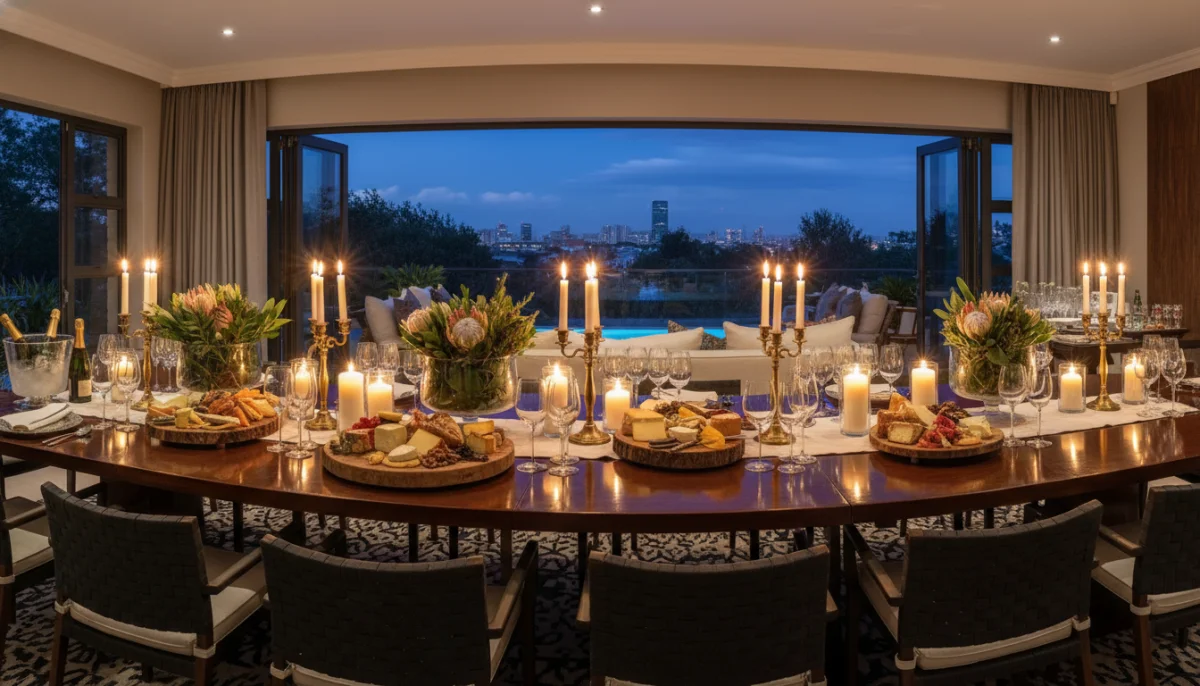
Pick a tight wine line-up, not a bottle museum
Five wines is enough. Six if your friends are sensible. More than that and the evening becomes a petrol station fridge with tasting notes. My blunt opinion: most hosts buy too many wines because they are scared the party will feel thin. It does not. It just gets messy and expensive.

Keep the wine order simple: bubbles, white, rosé if you must, light red, heavier red. South Africans like to argue about red wine temperature as if Parliament is in session. Serve it slightly cool if the room is warm.
- One dry bubbly for arrivals, because people settle faster with a glass.
- One crisp white, Chenin Blanc is an easy SA win.
- One fuller white or rosé if your crowd actually drinks it.
- One Pinotage, Cinsault, or light red that will not bully the cheese.
- One bigger red for later, when everyone has stopped pretending to analyse acidity.
Most People Forget
Guests care more about
- Knowing what to taste first
- Cold water on the table
- Enough small plates
- Somewhere to put a glass down
Than
- Ten different cultivars
- A dramatic speech about terroir
- Matching every cheese perfectly
- Fancy glassware for every pour
If you are hosting in a school hall, estate clubhouse, or somebody’s braai room in Pretoria East, label the bottles clearly. Not cute calligraphy. Clear. People over 45 do not want to squint at gold ink under warm fairy lights.
Cheese needs temperature, breathing room, and fewer grapes
Take the cheese out early. Cold cheese has the personality of a Nu Metro armrest. It looks fine, technically does the job, but nobody is emotionally involved.
- Remove hard cheeses from the fridge 45 minutes before guests arrive.
- Keep soft cheese covered until 20 minutes before serving.
- Put knives with the boards, not in one communal pile across the room.
- Cut a few starter pieces so nobody has to make the first ugly slice.
- Use two boards if you have more than 10 guests.


I always notice the cheese knives. Not because I am refined, I am not. Because at every second gathering someone uses the blue cheese knife in the camembert and then the whole board smells like a damp rugby sock. Put one knife per cheese, even if they are mismatched.
A sensible cheese mix
- A soft cheese: brie or camembert.
- A hard cheese: mature cheddar, boerenkaas, or gruyère if you are feeling fancy.
- A blue cheese: small portion only, unless your friends are dramatic.
- A goat’s cheese: good with Chenin and useful for people who say they do not like rich cheese.
- A local wildcard: smoked cheese, Klein River style, or something from a weekend market stall.
For snacks around the board, mini samoosas from an Indian deli work better than most people expect with bubbly. Biltong from a decent butcher also earns its place, especially if your guests keep circling the cheese like nervous pensioners at a buffet.
The table should guide people without becoming a craft project
Looks do not matter that much. Anyway, use low boards, small bowls, and warm light because ugly overhead lighting makes cheese look like office stationery.

There is one detail that decides whether guests leave early: chairs. Not matching chairs. Enough chairs. Wine tastings where everyone stands for three hours are for people wearing uncomfortable shoes and pretending they are fine.
- Put water at both ends of the table.
- Use side plates that are not too floppy.
- Keep napkins visible. People will not ask.
- Place crackers in shallow bowls, not towering packets.
- Keep the bin somewhere obvious but not beside the brie. Standards are low, but not gone.
The best wine nights are not silent tastings. They are controlled snacking with slightly better glassware.
Trevor, after watching one uncle monopolise a corkscrew
A small memory: I once watched a guest at a Randburg flat carefully sniff a glass of wooded Chardonnay, nod wisely, then ask if it was champagne. The host simply said yes. Good hosting sometimes means not correcting people.
Give the evening a shape, or people drift
You do not need a formal tasting sheet unless your crowd likes homework. A loose structure is enough. People want permission to start, pause, refill, and stop.
A Wine And Cheese Night That Does Not Sag
- Guests arrive to bubbly and one easy snack.
- First board opens with white wine and mild cheese.
- People sit down before the stronger cheeses come out.
- Red wine arrives with biltong, nuts, and the hard cheese.
- Coffee or one sweet bite appears before the last guest starts opening cupboards.

Keep the first 30 minutes gentle. No speeches. No forced education. If someone knows wine, let them talk only after the second bottle is open. That sounds unfair, but it protects everyone else.
| 5:30 PM | Take cheese out, set water, chill whites. |
|---|---|
| 6:15 PM | Light candles, open bubbly, hide packaging. |
| 6:30 PM | Guests arrive, first pour, no big announcement. |
| 7:15 PM | Bring out stronger cheeses and red wine. |
| 8:30 PM | Offer coffee, something sweet, and stop opening new bottles randomly. |
The sweet bite can be simple. Espresso brownie bites from a coffee roaster café are better than a huge dessert nobody asked for. If someone brings a Checkers cake counter cheesecake, accept it with grace and cut small slices. The cake did nothing wrong.
If you want one hosted element, make it the tasting
This is still a DIY night. But if it is a birthday, send-off, anniversary, or family celebration with people who expect a bit more, one paid element can sharpen the evening without turning your lounge into a corporate launch.
Hires to book: Wine Tasting or Catering & Drinks. Say the directory labels once, book the right person, then stop fussing.

A proper tasting host often lands around R4,500 - R12,000 depending on travel, wines included, guest count, and how fancy the explanation gets. A food and drinks team for a polished home evening can sit closer to R9,000 - R25,000 once staffing, glassware, setup, and clean-up are included. This is where the budget goes, not into seventeen tiny chalkboard signs.
Do I need a wine farm venue for this?
No. A home patio, estate clubhouse, or small private room works if the table is easy to reach and people can sit.
How much cheese per person?
Plan roughly 120g to 180g per person if it is the main food. Less if you are adding warm snacks.
Should guests bring wine?
Only if you give them a style. Otherwise you get three sweet rosés and one bottle with a dusty wedding sticker still on it.
The tiny rules that keep it civil
Put a jug of water within arm’s reach. Not in the kitchen. Not behind the wine. On the table. This is boring advice and it works.


- One corkscrew on the table and one hidden backup.
- Small pours first.
- No scented candles near the cheese.
- One non-alcoholic option that is not warm tap water.
- A separate knife for blue cheese.
- A quiet place for bags, because handbags on tasting chairs are a plague.
Also, watch the crackers. There is always one packet that tastes like cardboard wrapped in regret. Buy fewer varieties and more of the one people actually eat.
A DIY wine and cheese night does not need theatre. It needs decent wine, room-temperature cheese, enough chairs, and one host who is willing to say, yes, the blue cheese has its own knife.
Comments
Join the conversation — no account needed. Comments are moderated before they appear.
Be the first to leave a comment.
Leave a comment