
White tie started as the most formal evening dress code, tailcoats, white bow ties, gloves, court shoes, the whole severe little opera. In South Africa, it now lives in a strange but interesting place: charity galas at hotel ballrooms, embassy dinners, old boys' school halls that suddenly have chandeliers, awards nights, milestone birthdays where someone has decided they are absolutely not doing cocktail casual again.
Read this list as ten parallel directions. Pick one main route and maybe borrow one detail from another. If you combine the opera look, the Art Deco bar, the modern black floor, the silent service dinner and the after-party, you are not hosting white tie, you are building a small diplomatic summit.
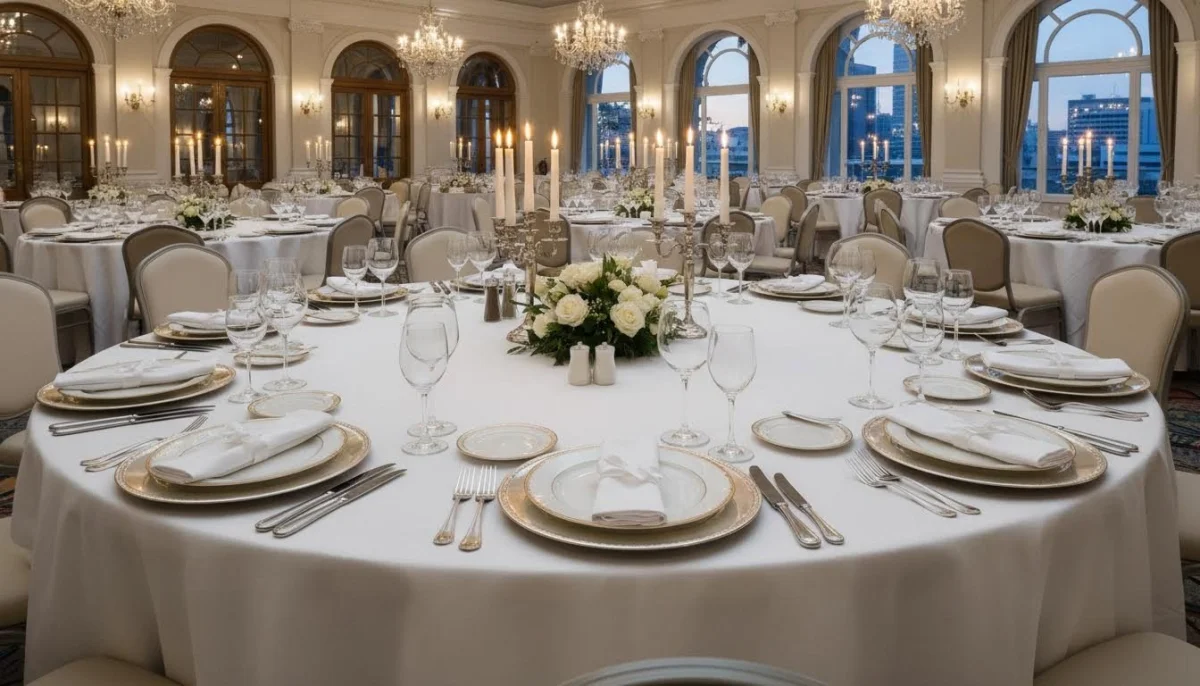
A good white tie table does not need ten colours. It needs restraint, height, shine and space for elbows. The old versions were about hierarchy. The modern version is more about making guests feel like they walked into a scene.
1. The old court dinner, but without the museum smell

The earliest white tie energy was not relaxed. It came from court dinners, aristocratic balls and opera nights where the clothing told everyone exactly where they stood. The modern South African host can borrow the shape without copying the stiffness: long tables, silver service, heavy napkins, soft candlelight and menus that are printed properly, not done in Canva ten minutes before.
This direction suits a milestone birthday, a formal anniversary dinner or a donor evening where speeches matter. It does not suit a crowd that wants to shout over amapiano by 8:30. Blunt opinion: white tie with plastic buffet chafing dishes looks confused. If the dress code is that formal, the meal should arrive plated or family-style from proper serving staff.
- Best for: 40 to 120 guests who can sit through a structured dinner.
- Spend priority: food timing, service staff, tableware, lighting.
- Skip: novelty props, loud centrepieces, anything blocking eye contact across the table.
- Tiny historical nod: place cards, a short printed menu and a proper toast.
The point is not to make everyone feel rich. It is to make the room behave differently for one night.
Riley Adams
2. The black-and-white ballroom that actually photographs cleanly

By the late 1800s and early 1900s, the ballroom version of white tie became the postcard image: glossy floors, women moving in satin, men in tails, orchestra tucked somewhere expensive. You can do a modern version with strong monochrome decor instead of fake palace dressing.
This is where Black & White Floors earn their keep. A crisp checked or high-gloss monochrome floor gives the room an instant graphic centre, especially in a bland estate clubhouse or school hall. Proper installations for a formal Saturday event can run from about R12,000 to R35,000 depending on size, transport, finish and whether the venue has awkward steps.
Most People Forget
Guests care more about
- A floor that invites slow movement
- Enough space between tables
- Good light on the first dance or opening toast
Than
- Twelve different decor motifs
- Chair sashes in a colour nobody can name
- A giant entrance sign saying the obvious
3. The opera supper, dramatic but not exhausting


White tie and opera are old friends. That does not mean you need actual arias, although a short live piece can be gorgeous if your crowd will not visibly panic. Think arrival drinks, a formal first course, one performance, mains, dessert, then a looser lounge hour.
| 18:00 | Guests arrive, drinks are passed, coats vanish quickly. |
|---|---|
| 18:45 | Host welcome, no long life story yet. |
| 19:00 | Starter served while the room is still focused. |
| 19:35 | Short performance, 12 to 18 minutes is enough. |
| 20:00 | Main course, speeches, dessert and lounge move. |
The oddly specific detail I always notice at these events: one parent or auntie sits with the programme folded into a fan, tapping it against a champagne flute at exactly the slowest part of the evening. That is your warning sign. Move the night along.
4. The Art Deco bar, because white tie got fun between wars

The 1920s pushed white tie into jazz rooms, hotel lounges and champagne service with a sharper edge. This is the version for hosts who want glamour without making guests whisper like they are inside a law library.
If you want one hire to make this direction feel adult, look at Beverage Services. A serious bar team for 80 to 150 guests can land around R18,000 to R45,000 before premium spirits, glassware upgrades and extra hours. That sounds steep until you compare it with warm MCC, slow queues and your cousin free-pouring gin like he is settling scores.
This route pairs well with mini canapes, a jazz trio or a low-lit lounge after dinner. For snacks, samoosas from a good Durban curry shop still disappear faster than dainty mushroom tartlets. I know white tie people pretend otherwise. They are lying.
5. The hotel gala version, clean, polished and slightly dangerous to the budget

The hotel gala is the South African white tie most people have actually seen: Sandton ballroom, Cape Town waterfront hotel, awards screen, waiters moving like they are on rails, one table that laughs louder than the rest. It is corporate in the old sense, not office-party corporate. There is polish, pacing and a mild threat of a keynote speech.
This is where Luxury Event Planners make sense, especially if your guest list includes VIPs, sponsors, family politics or a programme longer than dinner. Expect proper planning fees to sit anywhere from R35,000 to R120,000 plus supplier management, depending on guest count and scope. The value is not flowers. The value is not hearing, at 17:10, that the lectern is missing and the MC wants a different mic.
| Decision | More classic | More modern |
|---|---|---|
| Seating | Round tables, formal placements | Long tables with lounge pockets |
| Programme | Welcome, starter, speeches, main, award, dessert | Shorter blocks, more movement, fewer speeches |
| Lighting | Warm chandeliers and pin spots | Clean white light with one dramatic colour wash |
| Food | Three plated courses | Two courses plus late dessert table |
6. The garden white tie, softer than the ballroom and harder to pull off

White tie outside sounds wrong until you see it done well. Think wine estate lawns, embassy gardens, old family homes in Pretoria, a string quartet near the steps, not a rustic picnic. The evolution here is interesting: formal dress leaves the palace and walks onto the lawn, but the service standard has to stay high or it becomes fancy clothes fighting mosquitoes.
- Use proper pathways so heels do not sink into wet grass.
- Keep the colour palette pale, black, ivory, silver, deep green.
- Serve arrival drinks away from the dinner tables so guests move first.
- Ask the venue about music cut-off times before you fall in love with the photos.
- Have a wind plan in Cape Town. Not a wish. A plan.
For food, this direction likes elegant but recognisable bites. Mini vetkoek from a church kitchen can work as a late-night tray if the main dinner is formal enough. It sounds too homely until it lands hot, then nobody complains.
7. The monochrome modern dinner for people who hate fussy history


Not every white tie event needs to pretend it is 1895. The cleaner modern version keeps the dress code strict and strips the decor back: white flowers, black linen accents, mirrored surfaces, sculptural candles, no fake gold thrones. This suits younger hosts who want the drama of formal dress but not the old colonial aftertaste that can come with badly copied European decor.
The trade-off is that minimal decor exposes mistakes. A creased tablecloth looks louder. Cheap cutlery looks sadder. A cold room feels colder. Simple is brilliant, but simple is not lazy.
Minimal white tie
Expectation
- Less decor means less cost.
- Black and white automatically looks expensive.
Reality
- You spend more on fewer, better pieces.
- Lighting and linen quality decide whether it looks sharp or flat.
If you are using a school hall, this style can still work, but hide the sports noticeboards. I once saw a very serious table plan placed under a faded interhouse athletics banner from 2016. Nobody said anything. Everyone saw it.
8. The lounge-era white tie, where guests move instead of sitting forever

White tie used to mean strict seating, then strict dancing, then more strict seating. A modern host can loosen the format by creating lounge zones that still look formal. Guests in tuxedos actually enjoy somewhere to lean that is not the back of a Chiavari chair.
Lounge Furniture changes the pace of a white tie night. It gives older guests a softer option, lets younger guests hover without blocking service paths, and makes the after-dinner part feel designed instead of abandoned. For a polished setup, think R15,000 to R50,000 depending on quantity, delivery distance, fabric, coffee tables, rugs and damage waivers.
How this version should move
- Guests arrive standing with drinks
- Dinner feels formal and seated
- Dessert moves to side tables
- The lounge fills slowly
- Music gets warmer, but the room stays elegant
9. The charity ball, old manners with a very practical agenda

Charity balls helped keep white tie alive because they gave the dress code a job. Guests were not just dressing up to be seen, they were buying tables, bidding on lots, meeting patrons and acting mildly better behaved than usual. South Africa still does this well, especially in big hotel rooms and foundation dinners.
The danger is making the giving part feel like admin. If your auction is clunky, the room cools. If the pledge moment drags, people look down at phones under the table. There is one detail that decides whether guests leave early: the programme must respect the dinner rhythm.
Should the dress code be strict?
Yes, if you call it white tie. Explain it clearly on the invite and give examples, because many guests know black tie but not tails and white bow ties.
Can we do white tie without a full seated dinner?
You can, but it starts feeling like formal cocktail wear. For true white tie, a seated moment helps the dress code make sense.
What is the biggest hidden cost?
Service hours. Formal events need setup time, staff meals, overtime rules and late strike costs. Ask for the full quote, not the pretty first number.
10. The after-dinner salon, the most underrated white tie evolution

The best white tie events do not end with everyone trapped at a table waiting for permission to leave. Historically, there was often a move after dinner: music, cards, dancing, smoking rooms, drawing rooms, whatever the era allowed. The modern version is a salon hour. Not a nightclub. Not a sad coffee station. A warm, slower landing.
This is where you can choose your personality. A small jazz set, a dessert trolley, cognac service, a pianist, or a lounge playlist at conversation volume. If your crowd includes older relatives and younger cousins, this bridge stops the night splitting too sharply.
- Keep the dining room lights slightly lower after dessert.
- Open the lounge or bar area first, before announcing anything.
- Let service staff clear quietly while guests move.
- Serve coffee and one small sweet item, not a second full dessert spread.
- Only raise the music later if the room asks for it.
How to choose your white tie direction without overcooking it
Start with guest behaviour, not Pinterest. If your guests love speeches, choose the court dinner or charity ball. If they like movement, choose the lounge-era version. If your room is plain, the black-and-white ballroom gives you structure. If your venue already has architecture, go lighter and let it work.
| Your priority | Best direction | Where the budget should go |
|---|---|---|
| Maximum tradition | Old court dinner | Plated food, staff, tableware |
| Best photos | Black-and-white ballroom | Flooring, lighting, clean linen |
| Relaxed elegance | Lounge-era white tie | Seating pockets, bar timing, music volume |
| Sponsor or donor goals | Charity ball | Programme control, AV, guest flow |
| Younger crowd | Monochrome modern dinner | Lighting, bar, shorter formalities |
Choose one white tie direction, then book the few suppliers that carry that version properly: the floor, the bar, the planner or the lounge setup. TimeToParty can help you compare South African hire options without turning your event into a catalogue.
Comments
Join the conversation — no account needed. Comments are moderated before they appear.
Be the first to leave a comment.
Leave a comment