
A gaming tournament can be ruined by one bowl of sweaty chips. There, I have started with the serious matter. Not the prize pool. Not the controller drift. The chips.
Read this as a stack, not a shopping list. Layer these ideas across one party: choose a main food frame, add a drink station, sort the viewing setup, give spectators something to do, then decide which bits are worth hiring properly. You do not need every idea. You do need enough movement in the room so the people who get knocked out in round one do not sit on a plastic chair, chewing their pride for three hours.
The imagined party here is a birthday or social tournament in Joburg, Pretoria, Durban, or Cape Town. Think estate clubhouse, school hall, home lounge with the furniture shoved into one corner, or a small venue room where the aircon has opinions. It is not a LAN world championship. It is still worth doing cleanly.
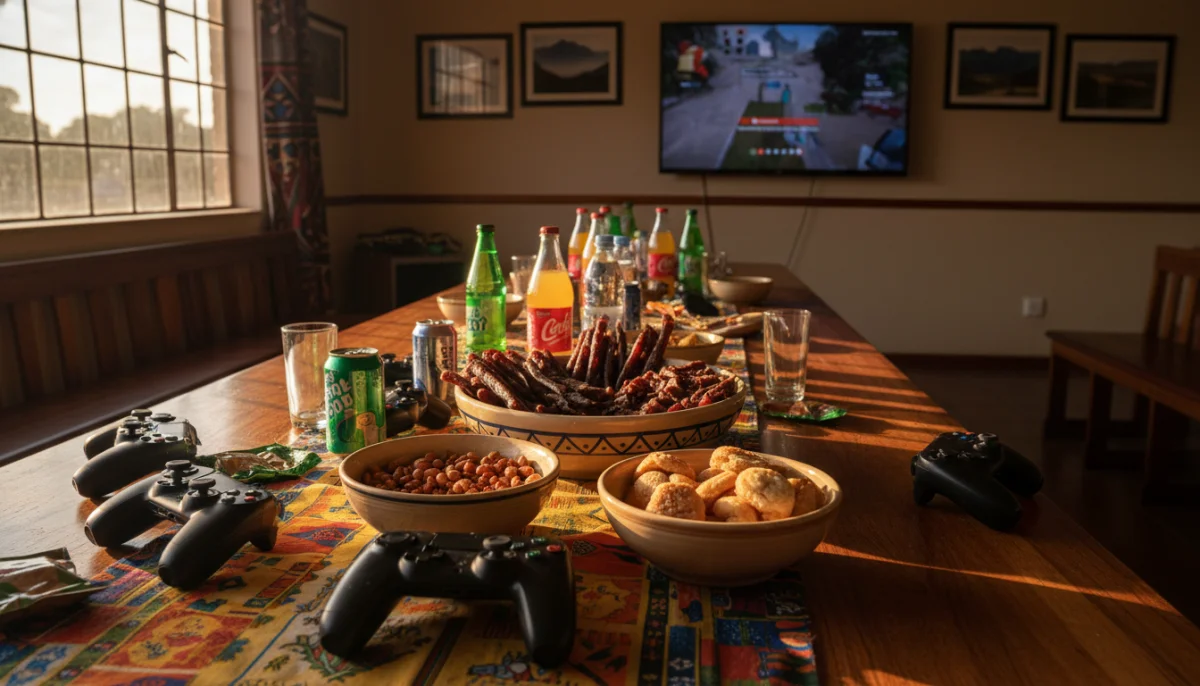
Visuals do not matter, except they do, because people judge the table before they taste anything. Keep food reachable from two sides if the room allows it.
1. Build the snack table like a game map

Start with zones. Salty near the entrance, sweet away from the controllers, drinks off to the side, napkins everywhere. If you put everything in one heroic heap, people hover like confused NPCs. The first twenty minutes become a shoulder exercise.
For a tournament, I like four lanes: grab-and-go, warm bites, sugar, and reset snacks. The warm bites should not need a knife. This is not a lunch at a wine farm where everyone pretends to understand the salad.
| Snack lane | What to serve | Where to source it |
|---|---|---|
| Grab-and-go | Mini sausage rolls, small pies, bite-size wraps | Checkers bakery counter if you are filling gaps around the main food |
| Warm bites | Butter chicken samoosas, chilli bites, mini rotis | A Durban curry shop or Indian spice shop |
| Sugar | Jelly sweet mixes, sour worms, small chocolate bars | A wholesaler sweet depot or China mall party shop |
| Reset snacks | Biltong sticks, droëwors pieces, nuts | A local butcher or biltong kiosk |
This pairs with the drink station later and the spectator lounge. It also helps the host because nobody asks, in that wounded voice, if there is food coming. Feed people before the first semi-final. They behave better.
2. Create a health bar drink station


The drink station is where the theme can be obvious without becoming childish. Red for health, blue for shield, green for stamina. Use proper jugs, glass dispensers, or clean cooler boxes. Do not pour blue syrup into a 2 litre bottle and call it cyberpunk. That is my blunt opinion. It looks like a school tuckshop experiment.
For adults, keep one alcoholic option and two non-alcoholic options. For teens, go hard on iced tea, flavoured sparkling water, and slush-style drinks. If there are younger kids floating around, make the cups different colours. Otherwise the wrong person drinks the wrong thing and aunties start auditing the table.
- One big water station with ice, because cola is not hydration
- Two themed mocktails in clear dispensers
- One caffeinated option, but not enough to weaponise the teens
- Reusable cups or clearly marked disposables
- A bin right next to the drinks, not across the room
This pairs with the snack map and the break schedule. Drinks must be close enough to use, but not close enough to the consoles that one excited cousin turns the final into a sticky crime scene.
3. Make the big screen feel like the arena

There is one detail that decides whether guests leave early: can they see what is happening without standing behind someone’s uncle in a golf shirt? A tournament is only fun for non-players if the match is visible. Otherwise you have four people playing and thirty people eating your budget.
A big screen gives the room a centre. If your venue has a built-in projector, test it in daylight, not at 6:15 PM when the first match should have started. A proper screen supplier can bring brighter display panels or a suitable setup for the space. For Saturday bookings, expect proper visual screen packages to sit anywhere from about R8,000 to R25,000 or more, depending on size, rigging, crew, and how fancy the venue thinks it is.
If spectators cannot follow the score, they stop watching and start asking where the cake is.
A tired but accurate host
This pairs with the arena lighting and the shoutcaster idea. It also makes the final feel like something. Not emotional, necessarily. Just not like people are watching someone change settings on a TV at Nu Metro brightness.
4. Run a loadout platter for each tournament phase

A phase platter is just food arriving in rounds. It sounds dramatic. It is really crowd control with garnish.
Food should arrive in waves. Qualifiers get easy snacks. Semi-finals get the warm stuff. Finals get sugar and cold drinks. This keeps the table alive and stops the early guests from inhaling everything before the late Cape Town cousin arrives, because somehow someone is always still parking.
| Arrival | Popcorn buckets from a cinema candy shop, biltong sticks, iced water |
|---|---|
| Qualifiers | Cheese samoosas from an Indian spice shop, mini wraps, fruit skewers |
| Semi-finals | Kota slices from a township takeaway spot, fries cups, dipping sauces |
| Final | Cupcake tower from an Instagram baker, sour sweets, cold cans |
This pairs with the scoreboard and the chill zone. If you are using a professional caterer, give them the match flow. They do not need to know who is playing Tekken. They need to know when hot food must land.
5. Add a spectator lounge for the knocked-out heroes

People lose. Some lose loudly. Some become analysts within fourteen seconds. Give them somewhere to sit where they can still watch, snack, and act like their controller was faulty.
This does not need to be expensive. Beanbags, a few low tables, a phone charging basket, and a side screen if the budget allows. The oddly specific thing I always notice: one parent will sit at the back guarding a handbag, a hoodie, and three half-finished drinks like it is a border post.
Most People Forget
Guests care more about
- A seat after they lose
- Seeing the score from the side
- Somewhere to put a plate
- Charging a phone
Than
- A complicated backstory for the theme
- Matching every cup to the console colours
- Foggy lighting in a tiny room
- A giant trophy that blocks the snack table
This pairs with almost everything. The lounge is the pressure valve. It keeps the room moving instead of forcing every guest into the same clump around the main screen.
6. Use a snack-and-scoreboard wall


A scoreboard wall turns waiting into watching. Use a printed bracket, a whiteboard, or a chalkboard if your handwriting has not been destroyed by adulthood. Put it near snacks, not behind the console table. People will check scores while they grab food, and suddenly the room understands the tournament.
Do not overdesign it. Names, rounds, times, finals. That is enough. If you want a bit of theatre, name the snack waves after match stages: spawn bites, mid-game refill, boss dessert. Fine. Slightly silly. Not illegal.
- Use thick black markers. Pale koki on white paper is an insult.
- Write gamer tags and real names if the crowd is mixed.
- Leave space for wildcard matches.
- Keep the prize visible but not where small children can handle it.
- Assign one scorer. Democracy is slow.
This pairs with the arena screen and the shoutcaster. It also gives grandparents a job, which is underrated. They may not know the game, but they understand brackets and snacks.
7. Bring in proper consoles, chairs and multiplayer gear

This is where the budget starts behaving like a real event. If you are hiring consoles, screens, controllers, racing rigs, VR stations, or arcade units, expect a proper weekend setup to land closer to R7,500 - R25,000, sometimes more for multiple stations and crew.
You can absolutely run a small tournament from your own console. But if this is a bigger birthday, corporate social, school fundraiser, or matric after-party in a hall, proper hired gear helps. It gives you enough stations so the event breathes. It also means someone else has packed the cables, which is a spiritual benefit.
Pick games that are quick to understand. FIFA, Mario Kart style racing, fighting games, party sports, rhythm games, and simple VR experiences work better than slow campaign games. I do not care how deep the lore is. Guests are not there for a lecture from a man wearing a lanyard.
| Crowd | Best setup | Why it works |
|---|---|---|
| Teens | Two to four fast multiplayer stations | Less waiting, more noise, fewer sulking clusters |
| Adults | Racing rigs, football games, retro arcade unit | Low learning curve and enough nostalgia to be dangerous |
| Mixed family crowd | Main tournament plus casual side station | Younger kids stay busy without interrupting serious matches |
| Corporate team night | Brackets, scorer, prize table, visible rules | Adults need structure or they invent politics |
8. Give the finals a sound plan, not just volume

Sound at gaming parties is usually either too quiet or airport-level aggressive. You need game audio, host announcements, and maybe a short playlist between rounds. You do not need bass so heavy the snack table starts migrating.
For a clubhouse or hall, a proper speaker and mic booking can run from about R4,500 - R12,000 for a clean small-event setup, more if you add technicians, multiple rooms, or stage lighting. This is not the same as asking your cousin to bring his Bluetooth speaker with one working leg.
This pairs with the big screen and the final round. If you have a confident host, give them a mic for rules and score calls. If you have an overconfident host, take it away after prize giving.
Do we need a DJ for a gaming tournament?
Usually no. A playlist and clean announcements are better unless the party turns into dancing later.
Should game audio play through big speakers?
For finals, yes. For every station, no. Too much audio makes the room tiring.
Is a microphone really necessary?
For more than twenty guests, yes. Shouting rules across a hall is how adults lose dignity.
9. Turn dessert into the boss fight


Dessert should not fight the tournament. Put it at the final or just after. If you cut cake too early, you break the room’s attention. If you cut it too late, parents start whispering about getting home to Midrand before the highway gets stupid.
A boss fight dessert table can be simple: one cake, cupcakes, popcorn, sour belts, and a few themed toppers. A cake studio or home baker can do pixel blocks, controller shapes, or game colour palettes without turning the cake into a plastic toy shop. I prefer cupcakes for big groups because the cutting process at parties has defeated better people than us.
This pairs with the prize moment. The winner gets announced, dessert opens, photos happen, everyone’s energy drops neatly instead of collapsing randomly.
10. Add a short break quest, because humans need movement

A tournament room needs movement. People stand, sit, lean, drift, snack, return. If everyone is locked in one position, the party starts feeling like detention with better lighting.
A Gaming Tournament Party Rhythm That Works
- Guests arrive and choose gamer tags
- First snacks open while practice rounds run
- Qualifiers start with short matches
- Break quest sends people to drinks and scoreboard
- Semi-finals get warm food
- Final plays on the big screen
- Prize and dessert close the room
The break quest can be tiny. Vote for best gamer tag. Guess the final score. Do a fastest lap challenge at a side station. Ask guests to collect a snack sticker from the drink table if you are that kind of organised. I am not, but I admire the species.
This pairs with the scoreboard wall and dessert timing. It also gives the host a clean way to reset controllers, wipe tables, and find the missing cable that was definitely there five minutes ago.
Sample stack: a clean gamer birthday without overcooking it

If you want the short version, combine Item 1, Item 2, Item 3, Item 7, and Item 9. That gives you food flow, drinks, a real viewing point, enough equipment, and a dessert finish.
For a teen birthday in an estate clubhouse, I would keep it very direct: hired gaming stations if the guest list is big, one main display for finals, snack waves, self-serve drinks, and a cake or cupcake table. Skip complicated decor. Use light strips, black cloths, and neat labels. It will look good even though I just said looks are not the point.
| Layer | Practical choice | Budget note |
|---|---|---|
| Food | Main hot food from a caterer, plus butcher biltong and sweet depot sweets | Professional food service can vary widely, but proper event food often becomes one of the biggest costs |
| Drinks | Two mocktails, water, cans, ice | Retail drinks and ice are manageable if you plan quantities |
| Gameplay | Multiple stations and spare controllers | Good hired setups cost real money, but they reduce waiting |
| Viewing | One strong main screen for finals | Worth it if spectators matter |
| Dessert | Cupcakes and one smaller cake | Easier than cutting a huge cake under pressure |
Quick chooser: what to layer for your crowd

Choose based on the weakest part of the party. If guests will wait too long, add more play stations. If spectators will get bored, invest in the screen and scoreboard. If the crowd is mixed age, sort the food early and make the lounge comfortable. If it is mostly teens, do not pretend they want a formal dinner. They want speed, cold drinks, and the right to complain about lag.
Expect vs reality
People think they need
- Massive themed decor
- Ten snack types
- A complicated tournament app
- A dramatic entrance moment
They usually need
- Clean seating and visible screens
- Four strong snack lanes
- A clear printed bracket
- A host who starts rounds on time
The best gaming parties I have seen were not the fanciest. They were the ones where people knew where to go, what round they were in, when food was coming, and where to sit after losing. Boring details, yes. Boring details are the bones of a decent party.
And yes, if you are using a school hall or clubhouse, ask about rules for food, noise, and closing time. Some venues allow everything except common sense. Others have one laminated rule sheet from 2009 and a caretaker who appears exactly when you move a table.
Pick your snack lanes, drink station, screen plan, and gameplay setup, then book the few professionals who stop the day from dragging. TimeToParty can help you compare the hire options that make sense for a South African gaming tournament, without turning your lounge into a trade show.
Comments
Join the conversation — no account needed. Comments are moderated before they appear.
Be the first to leave a comment.
Leave a comment